Share your mobile internet with a more stable signal.
Adverts
Share your mobile internet connection. Achieving high stability requires more than simply activating the portable access point button in your smartphone's quick settings.
Signal fluctuation and sudden drops in speed usually occur due to saturation of wireless channels and physical barriers in homes.
Adjusting hidden technical parameters in the device's operating system ensures that receiving devices maintain a continuous exchange of data packets.
This practical guide presents sound strategies for transforming your mobile device into a highly efficient router, maximizing the performance of your data plan.
Adverts
What causes instability when routing mobile data to other devices?
Degradation in distributed speed is often linked to electromagnetic interference from other home routers operating in the same coverage area.
When multiple devices use identical frequencies, a collision of digital packets occurs, forcing the cell phone's processor to constantly resend the interrupted information.
Additionally, the physical distance and thickness of the masonry walls attenuate the radio waves emitted by the internal antenna of the transmitting smartphone.
Positioning the device in elevated and unobstructed locations reduces geographical barriers, allowing the network to propagate homogeneously.
The action of Share your mobile internet connection. It also suffers direct impacts from the aggressive thermal management performed by current Android and iOS systems.
The simultaneous operation of the cellular modem and the Wi-Fi chip generates excessive heat, forcing the ecosystem to reduce performance for self-preservation.
How do I choose the ideal transmission frequency to avoid connection drops?
The choice between frequency bands defines the range and immunity of the access point against external network noise. The classic 2.4 GHz frequency offers greater penetration through physical obstacles, but suffers from severe congestion from neighboring networks.
Alternatively, the modern 5 GHz band delivers significantly higher transfer rates and lower latency, ideal for video calls and heavy video streaming.
The only drawback of this higher bandwidth is its reduced range, requiring close physical proximity between the paired devices.
To understand the technical regulations of telecommunications, follow the evolution of mobile data coverage in Brazil, and access official sector reports, visit the institutional page of... National Telecommunications Agency (Anatel) It offers complete information for the consumer.
| Anchoring Protocol | Average Latency Recorded | Actual Transfer Fee | Impact on Battery Consumption | Recommended Use Scenario |
| USB cabling | 12 ms to 18 ms | Up to 480 Mbps (USB 2.0) | Low (Device Charging) | Fixed work on the notebook |
| 5 GHz Wi-Fi Hotspot | 22 ms to 35 ms | Up to 150 Mbps stable speed | Very High (Heating) | Streaming and quick games |
| 2.4 GHz Wi-Fi Hotspot | 40 ms to 65 ms | Up to 54 Mbps fluctuating | High (Moderate use) | Long-range connection |
| Bluetooth Tethering | 120 ms to 180 ms | Limited speeds up to 3 Mbps | Very Low (Economical) | Email checking only |
What are the practical advantages of wired USB tethering over wireless networking?
Using a physical cable for routing completely eliminates any possibility of external radio interference created by nearby appliances.
This technical approach establishes a direct data bridge, drastically reducing network latency, popularly known in the digital environment as ping.
Another obvious benefit lies in the continuous power supply, since the connected computer powers the smartphone's battery during use.
This dynamic eliminates the fear of rapid data drain, allowing for long work or study sessions without serious operational interruptions.
The decision to Share your mobile internet connection. Using a USB port only requires enabling the specific feature in the system's mobile network menu.
Modern operating systems recognize the connected device instantly, eliminating the need to install complex third-party programs or drivers beforehand.
Why does the power saving management disable the access point on its own?
Modern smartphones prioritize energy efficiency through strict algorithms that terminate background processes deemed idle by the system.
If the connected devices go a few minutes without transferring data, the transmitting phone will turn off the access point to conserve resources.
Read more: Interesting facts about submarine cables that connect the internet.
Disabling this automatic shutdown function in the advanced network options keeps the transmission channel permanently open and ready for use.
This simple setup avoids the hassle of having to unlock your phone screen repeatedly throughout the workday.
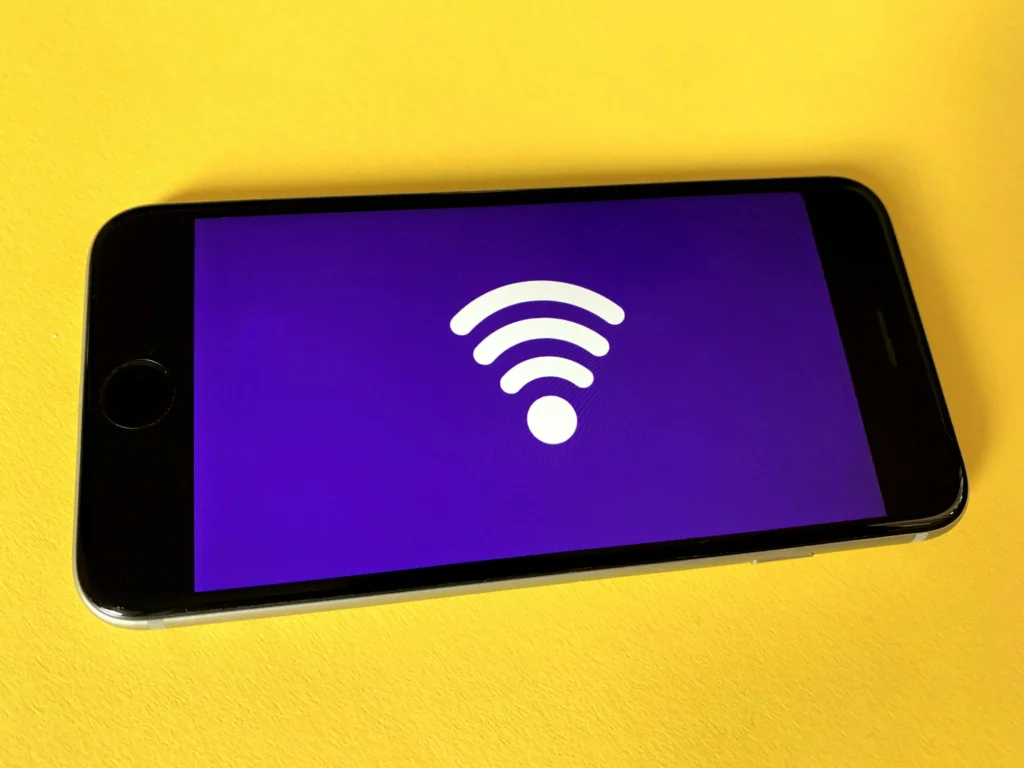
Adjust the action of Share your mobile internet connection. It also involves limiting the number of devices that can connect simultaneously to your portable network.
Restricting access to a maximum of two simultaneous devices prevents mutual degradation of your data plan's browsing speed.
When should you set a manual data limit to preserve your data plan speed?
Setting a data cap serves as a safeguard against silent automatic updates performed by the operating systems of the network's receiving computers.
Computers tend to identify Wi-Fi connections as unlimited networks, initiating heavy downloads in the background that quickly deplete your mobile data allowance.
Know more: Interesting facts about modern satellites and the current global internet.
Enabling the metered network option in your computer's network settings informs the system that the connection has strict commercial limits.
To monitor global mobile connectivity trends, data traffic research, and global technological infrastructure reports, the portal of GSMA (gsma.com) It provides technical analyses from highly authoritative international sources.
The technical path to a mobile connection without operational bottlenecks.
Mastering the access point's configuration parameters transforms an emergency tool into a solid alternative for everyday connectivity.
Neglecting these fine adjustments results in chronic slowness, stress from dropped calls, and premature wear and tear on your cell phone's components.
Read more: Most expensive internet domains ever sold in digital history.
Access your device's connection menu today, select the ideal transmission band, and test the stability offered by the physical USB cable.
Adopting these operational technical precautions ensures a clean, robust signal that is perfectly capable of supporting your professional or entertainment demands with maximum efficiency.
Frequently Asked Questions about Signal Routing
Frequently sharing your mobile internet connection can reduce battery life?
The heat generated by the simultaneous use of the antennas accelerates the chemical wear of the battery, so it is recommended to use this feature in well-ventilated areas.
How can I prevent people who are offline from discovering my cell phone network?
You can check the option to hide the network name (SSID) in the access point settings, making it invisible to third parties.
Does Bluetooth consume less energy than Wi-Fi when sharing data?
Yes, Bluetooth consumes less energy, but the maximum browsing speed is severely limited to a few megabits.
Why does my speed drop even when I'm right next to the transmitting smartphone?
This can happen because your mobile carrier has exceeded its data limit or because of fluctuations in the cellular signal (4G or 5G) received from the tower.