Interesting facts about submarine cables that connect the internet.
Adverts
Discovering the workings of the cables submarines that connect to the internet Global data reveals a monumental infrastructure that defies the ocean depths to keep our digital society active.
Far from relying exclusively on space satellites, the global network is anchored to the seabed by means of immense highways of pure fiber optics.
What are submarine cables and how do they transmit data?
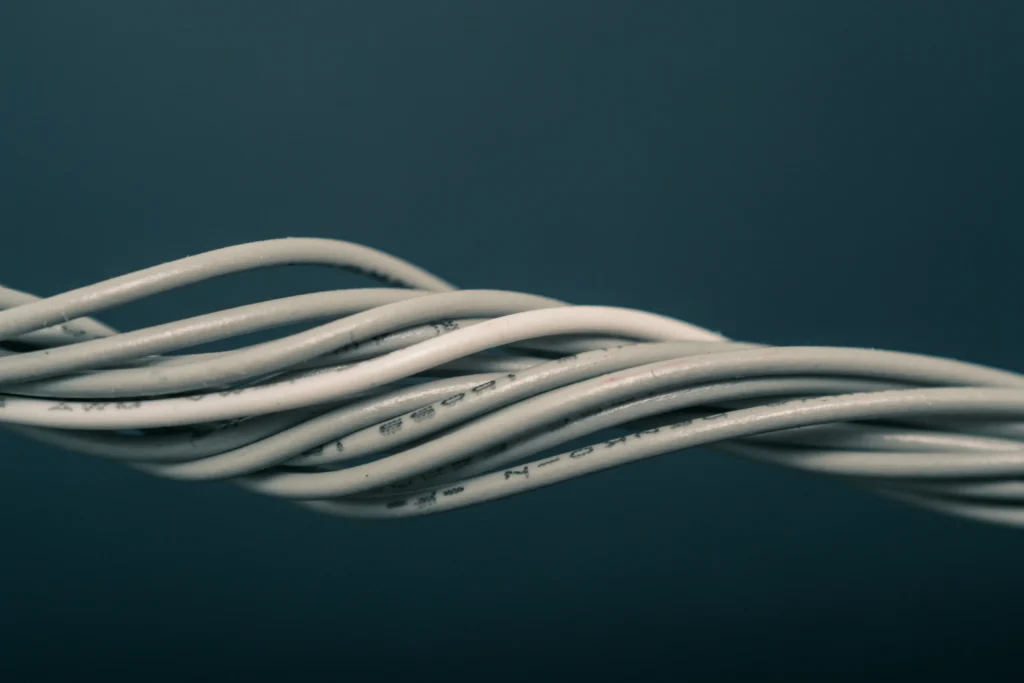
These structures are long transmission lines composed of microscopic bundles of optical fiber, coated with concentric layers of steel, copper, plastic, and waterproof insulators.
Its primary function is to transmit pulses of laser light over thousands of kilometers, connecting continents in almost imperceptible fractions of a second.
Adverts
International data traffic flows almost entirely through these underwater routes, leaving satellites with residual tasks of transmission or connections in isolated locations.
The speed and stability afforded by light trapped within glass vastly surpass any alternative radio or microwave transmission methods from space.
How are these structures installed on the ocean floor?
Specialized cargo ships operate like veritable floating factories, loading tons of cables coiled in enormous circular tanks before beginning their journey on the high seas.
The vessel uses remotely controlled underwater plows to dig thin trenches in the seabed, where the transmission line is properly buried.
The engineering behind the cables submarines that connect to the internet It requires detailed mapping of the underwater topography to avoid active volcanoes and deep trenches.
Near coastal areas, the metal shielding is reinforced to the maximum extent to withstand the corrosive action of the tides and possible accidental human interference.
In deep abyssal trenches, where human activity is nil, the thickness of the cable is drastically reduced, resembling the diameter of a conventional garden hose.
The water pressure itself and the natural insulation of the seabed protect the glass filaments from thermal variations that could damage the light signal.
What are the operational metrics for the world's largest connecting routes?
The data transmission capacity of these optical lines expands annually through the development of signal amplifiers and new wavelength multiplexing methods.
Large fintech companies and cloud service providers are investing billions of dollars in building unique and highly resilient routes.
To understand the physical scale and traffic capacity that underpins the contemporary digital ecosystem, analyze the structured technical data in the table below:
| Cable System Name | Territorial Extension | Transmission Capacity | Main Connection Points |
| Cabo Firmina (Google) | ~ 13,500 Kilometers | 240 Terabits per second. | From the United States to Argentina and Brazil. |
| Cabo Marea (Microsoft/Meta) | ~ 6,600 Kilometers | 200 Terabits per second. | Virginia (USA) to Bilbao (Spain). |
| 2Africa (Global Consortium) | ~ 45,000 Kilometers | Up to 180 Terabits per second. | Circumnavigation of Africa, Europe, and Asia. |
As revealed by the detailed maps maintained by the database of TeleGeography Submarine Cable Map, There are hundreds of active systems interconnecting the major global economic regions.
What are the biggest physical threats to the functioning of the marine network?
Despite popular belief blaming constant attacks by voracious sharks, the main causes of cable breaks stem from commercial activities such as bottom trawling.
Anchors from huge merchant ships, inadvertently dragged along the seabed, account for the vast majority of technical incidents recorded annually by operators.
Cable safety submarines that connect to the internet It is monitored in real time by acoustic detection systems and automatic variations in the speed of light.
Explore: How the internet worked before the invention of Wi-Fi
When a fracture occurs, specialized repair vessels sail to the exact coordinates of the cut, fish out the broken ends, and perform optical fusion on board.

Extreme geological events, such as underwater tectonic earthquakes and landslides in marine canyons, can also disrupt multiple systems simultaneously, requiring automatic contingency plans.
Providers mitigate these risks by distributing data traffic across distinct geographical paths, ensuring that the network remains online even during severe crises.
How does international geopolitics influence the construction of these routes?
Control over land-based mooring points and ownership of the consortia that finance the projects have become priority national security issues for several governing powers.
Countries are vying to establish strategic data centers on their borders to guarantee sovereignty over the flow of sensitive information among their populations.
Know more: Evolved Internet of Things: smarter homes and cities
The governance of the axes submarines that connect to the internet It requires complex international diplomatic treaties to guarantee the right of passage through foreign territorial waters.
To examine the technical cooperation and telecommunications regulation guidelines that organize these global ecosystems, please consult the official portal of... International Telecommunication Union.
Understanding these regulatory dynamics helps to visualize how ocean engineering and diplomacy work together to keep the planet permanently connected in a network.
The future of infrastructure beneath the world's oceans.
The constant evolution of materials engineering promises the development of optical fibers with hollow cores, capable of further reducing the latency of international data transmission.
Underwater routes continue to expand toward the Arctic, taking advantage of new geographical rifts to create shorter paths between Asia and Europe.
Read more: Technological tools to improve Wi-Fi and connection stability.
Investing in the resilience and diversification of these hidden connections ensures global economic stability, enabling the advancement of integrated technologies and secure cloud computing.
The ocean floor, far from being a silent desert, holds the glass filaments that sustain the knowledge, communication, and unity of our civilization.
Frequently Asked Questions (FAQ)
Could low-Earth orbit satellites completely replace ocean cables?
No, because cables offer infinitely greater bandwidth capacity and lower technical latency than any current satellite network can commercially deliver.
How do engineers ensure the power supply to amplifiers at the bottom of the sea?
The cables have an inner layer of copper that carries thousands of volts of direct current from power stations located on the beaches.
What is the average operational lifespan of a submarine fiber optic cable?
Most projects are designed to operate economically for about 25 years, after which they become obsolete in the face of new transmission technologies.
Do sharks really pose a real danger to the integrity of the global internet?
The incidence of shark bites is extremely rare and controlled since manufacturers began including shielding with protection against attractive electromagnetic fields.