Real-time synchronization technology between devices
Adverts
A real-time synchronization technology It became the circulatory system of modern productivity in 2026, connecting digital ecosystems invisibly and instantly for millions of users.
What was once a basic backup convenience has transformed into a critical infrastructure that supports everything from collaborative document editing to complex financial operations in milliseconds.
What is real-time synchronization technology?
Essentially, this innovation refers to the ability to reflect data changes across multiple devices simultaneously, without the need for manual intervention or constant page refreshes.
When you edit a note on your smartphone and it instantly appears on your laptop, you witness the efficiency of algorithms that prioritize immediate consistency.
Adverts
By 2026, the maturity of 5G and the start of 6G deployments will have reduced latency to levels imperceptible to the human eye.
This allows the real-time synchronization technology It operates through "Operational Transformation" (OT), ensuring that editing conflicts are resolved automatically by intelligent software.
How does instant data transfer work?
The technical magic occurs through persistent bidirectional connections, where the server and the client maintain an open channel for the constant exchange of information.
Protocols like gRPC (Google Remote Procedure Call) dominate the current landscape, offering extremely lightweight and fast data serialization for mobile devices.
Unlike the traditional request model, where the device asks the server if there are any updates, here the server "pushes" the information as soon as it becomes available.
This approach saves battery power and bandwidth, making it... real-time synchronization technology Sustainable for widespread use in wearable devices and IoT sensors.
Why is interoperability the biggest challenge today?
Historically, large manufacturers created walled gardens where fluidity only existed between products of the same brand, making life difficult for users who mix different operating systems.
Currently, the pressure for open standards has forced greater openness, allowing independent cloud services to act as universal data bridges.
There is something unsettling about the exclusive reliance on closed ecosystems, as it limits consumer freedom of choice and creates information silos.
The adoption of libraries such as Automerge It allows developers to create applications where the data belongs to the user, seamlessly synchronizing between Windows, iOS, and Android.
Comparison of Data Stream Technologies (2026)
| Protocol | Average Latency | Main Use | Battery Efficiency |
| WebSockets | 10ms – 50ms | Web Chats and Dashboards | Moderate |
| gRPC | 5ms – 20ms | Communication between Apps and Microservices | High |
| MQTT | 20ms – 100ms | IoT Devices and Sensors | Excellent |
| HTTP Long Polling | 150ms+ | Legacy Systems | Low |
What are the real benefits for productivity?
Eliminating the waiting time between the creation and availability of information generates immense cognitive gains, as it removes digital friction from daily life.
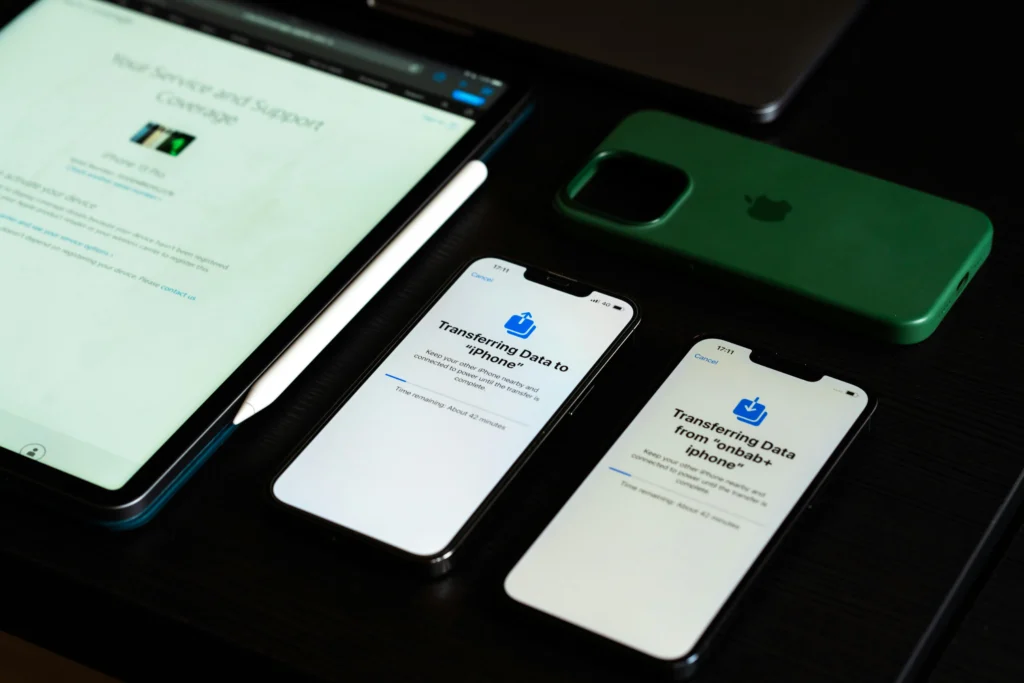
Teams distributed around the world now collaborate on 3D design or real-time programming projects as if they were in the same physical room.
Read more: Assistants with generative AI and their impact on productivity.
Furthermore, the real-time synchronization technology It allows the exact state of an application to be preserved during hardware replacement.
You start an email on your smartwatch and finish the last sentence on your tablet, without ever needing to save drafts or search for lost versions.
How does security protect your data in the cloud?
With the ubiquity of data exchange, concerns about privacy have reached new levels, demanding encryption methods that do not sacrifice transmission speed.
The current standard uses the TLS 1.3 protocol combined with encryption keys generated locally on the devices, ensuring that the server never sees the content.
Know more: Digital security during the holidays: how to protect your devices and data at the end of the year.
This layer of protection is vital to prevent interception during traffic on public Wi-Fi networks or man-in-the-middle attacks.
Implement the real-time synchronization technology Without rigorous access control and key auditing, it would be an unacceptable risk for businesses and individuals in 2026.
Which devices benefit most from this innovation?
Although smartphones are the main players, smart headphones and augmented reality glasses rely heavily on this agility to offer immersive and useful experiences.
If the GPS orientation in a pair of AR glasses is delayed by even a second, the information immediately loses its practical usefulness.
Read more: How do websites know your location without GPS?
Automotive integration has also made giant leaps, allowing driver preferences and navigation routes to be updated instantly upon entering the vehicle.
This constant connection solidifies the real-time synchronization technology as the fundamental building block for the Internet of Everything (IoE), unifying our physical and digital interactions.
How to choose the best synchronization tools?
When selecting software for professional or personal use, prioritize those that clearly explain where the data is stored and what transport technology is used.
Tools that offer native support for CRDTs (Conflict-free Replicated Data Types) are generally superior, as they handle periods of internet instability better.
Also check the platform's historical compatibility with security updates and its ability to export your data in a readable format.
True digital freedom emerges when... real-time synchronization technology It works for the user, and not when the user becomes a hostage of a single proprietary platform.
The Future of Digital Coherence
We have reached a point where the distance between thought and digital execution is almost nonexistent, thanks to advances in network infrastructure and algorithms.
The trend for the coming years points to an even deeper synchronization, involving biometric states and environmental contexts that adjust as we move.
Security and speed must go hand in hand so that public trust is not shaken by critical privacy failures.
If you want to deeply understand the technical standards that govern these communications, explore the official documentation of... Internet Engineering Task Force (IETF), where global protocols are debated and defined.
FAQ: Frequently Asked Questions
1. Does real-time synchronization drain the battery quickly?
Modern protocols like gRPC and MQTT are optimized to send only "deltas" (small changes), which consumes significantly less power than traditional update methods.
2. What happens if I lose internet access?
Most modern applications use optimistic synchronization; they save changes locally and merge them with the cloud as soon as the connection is re-established, automatically resolving conflicts.
3. Is my data secure during the transfer?
Yes, provided the service uses end-to-end encryption. This ensures that only your authorized devices have the necessary keys to read the transmitted information.
4. What is the difference between backup and synchronization?
Backup is a static copy for disaster recovery, while synchronization aims to keep all devices dynamically updated with the most recent and identical version of the data.
5. Why does my app sometimes take a long time to update?
This usually occurs due to instabilities in the local network or excessive latency in overloaded servers, although the use of 5G networks is expected to drastically minimize these incidents by 2026.