Reasons why laptops are losing modern DVD drives
Adverts
The decision by manufacturers to do laptops lose DVD drives It revolutionized laptop engineering, redefining design priorities, power autonomy, and portability over the last decade.
Optical discs occupied a disproportionate amount of internal space, drastically limiting the thickness of the chassis and forcing the use of mechanical components that were subject to frequent physical failures.
Removing disk drives allowed engineers to expand internal space for larger batteries, robust thermal systems, and ultra-fast SSD memory.
Today, consumers prioritize thin and light devices, shifting media consumption to high-speed connections and decentralized digital platforms.
Adverts
Why did manufacturers eliminate DVD drives from laptops?
The pursuit of extremely thin and light devices has driven the gradual removal of older optical media from the personal computing ecosystem.
A standard disk drive required up to twenty millimeters of vertical thickness, making it impossible to create ultrabooks and laptops aimed at daily productivity.
Replacing mechanical drives with NVMe drives eliminated severe read bottlenecks, while also reducing the overall weight of the devices by hundreds of grams.
Furthermore, removing the optical motor freed up essential space to increase the capacity of the lithium-ion batteries, significantly extending the daily autonomy of users away from the power outlet.
| Internal Component | Required Physical Space | Impact on Autonomy | Average Transfer Rate |
| Internal DVD/CD player | Height from 9.5 mm to 12.7 mm | High mechanical consumption | Up to 21 MB/s (16x DVD) |
| NVMe M.2 SSD (Current) | 2.2 mm thin plate | Minimum power consumption | Up to 7,000 MB/s (PCIe 4.0) |
| Expanded Battery | Reuses driveway space | Increases overall lifespan. | N/A (Power source) |
| USB-C / Thunderbolt connection | Compact exterior door | Use on demand | Up to 5,000 MB/s (40 Gbps) |
How has the evolution of connectivity and storage accelerated this change?
The expansion of the USB bus and the emergence of USB-C ports have enabled file transfers at speeds infinitely superior to traditional physical media.
Read more: History of Floppy Disks, CDs, and USB Drives: How We Stored Files Before the Cloud

Downloading a large file via a local network or fiber internet consumes a fraction of the time previously required to record data on optical discs.
Compact flash drives and external SSDs offer unparalleled durability, withstanding drops and scratches that easily ruined older DVDs.
Technical specifications published by USB Implementers Forum They show how the evolution of digital buses has completely replaced the need for dedicated SATA buses for slow optical drives.
Why have changing consumer habits led to the obsolescence of physical media?
The growth of video streaming services and digital software distribution has radically altered the public's relationship with entertainment.
Games, operating systems, and professional programs are now downloaded directly from cloud servers, eliminating the need for physical media printed in retail boxes.
Know more: How to turn your phone into a universal remote control
The transition of companies to software-as-a-service models has made disk support an unnecessary and outdated industrial cost.
See laptops lose DVD drives This reflected the direct adaptation of the hardware industry to the demands of users integrated with constant broadband internet.
What are the alternatives for those who still need to read DVDs today?
Users who preserve old collections on disc can easily use external DVD players connected via universal USB ports.
These portable recorders are inexpensive, don't require dedicated power supplies, and operate on a Plug and Play system with any modern operating system.
Read more: Free tools to convert YouTube videos to MP3 and MP4
Converting physical media to MP4 or ISO digital files allows you to store entire collections on internal SSDs or private clouds. This strategy ensures the preservation of content against the natural degradation of the plastics and dyes that make up recordable discs.
How has the internal design of laptops evolved without the optical drive?
Eliminating the side drawer allowed for the creation of more rigid, monobloc structures that are more resistant to torsion caused by daily computer use.
Without the gap for a mechanical drive, designers positioned dual fans and larger heat sinks to cool advanced multi-core processors.
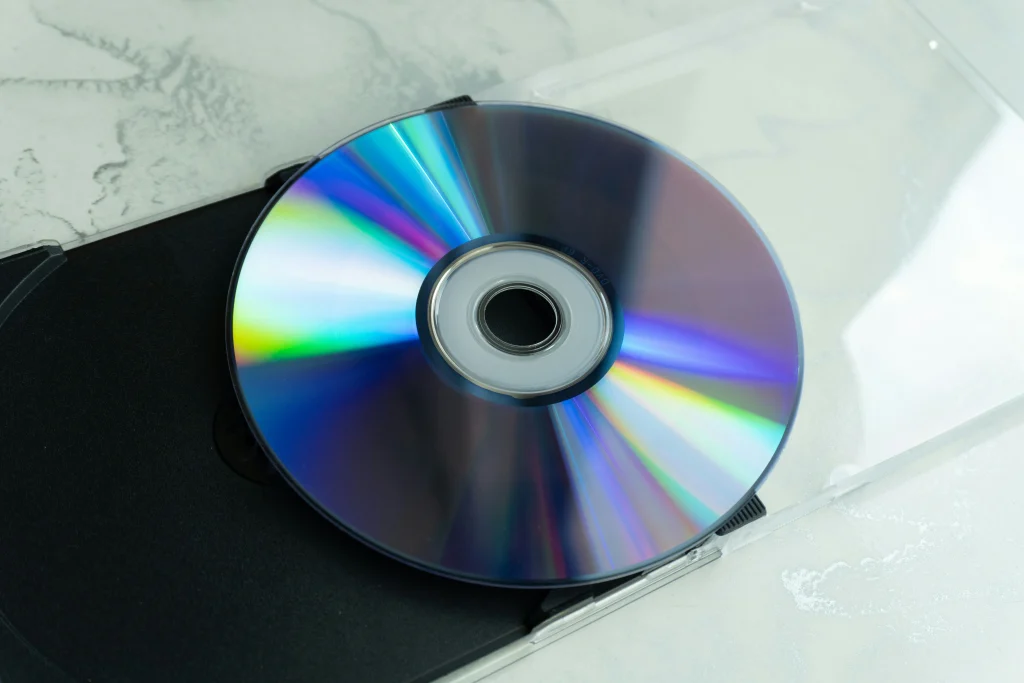
This reorganization made room for higher-fidelity speakers and more compact motherboards, optimizing every millimeter of the metal chassis.
The decision to do laptops lose DVD drives It paved the way for the era of ultra-efficient, silent, and visually elegant laptops.
Detailed analyses on the transformation of consumer electronics published by the portal IEEE Spectrum They reinforce how the miniaturization of components has driven global energy efficiency. The retirement of the DVD has accelerated the consolidation of more integrated, agile, and sustainable digital ecosystems.
Frequently Asked Questions (FAQ)
Can I install an internal DVD drive in a modern laptop?
This is not possible in most cases, as current structural designs lack the internal physical space and SATA connections necessary for optical drives.
What are the advantages of using an external USB DVD player?
The main advantage is the flexibility to connect the reader only when needed, keeping the notebook lightweight and portable during everyday use.
Do DVDs last forever if stored properly?
They don't last, as recordable discs suffer chemical degradation of the organic layer over the years, making the digitization of important files essential.