Why using a VPN on your phone can protect you more than you think

Adverts
In the increasingly connected world of 2025, use VPN on your cell phone has become an essential strategy for those who value privacy, digital security and online autonomy.
In this article, we'll explore the main reasons why a VPN is essential for your smartphone, with real-world data, examples, and a critical look at the current risks of unprotected browsing.
Summary:
- What is a VPN and how does it work on your phone?
- The real risks of unprotected navigation
- Public networks and the invisible trap
- Geo-blocking and freedom of access
- How to avoid abusive data tracking
- Banking and financial security with VPN
- VPN for professionals, students, and travelers
- How to choose a good VPN among so many options
- The technology behind encryption and the future of protection
- Final considerations and practical guidelines
1. What is a VPN and how does it work on your cell phone?
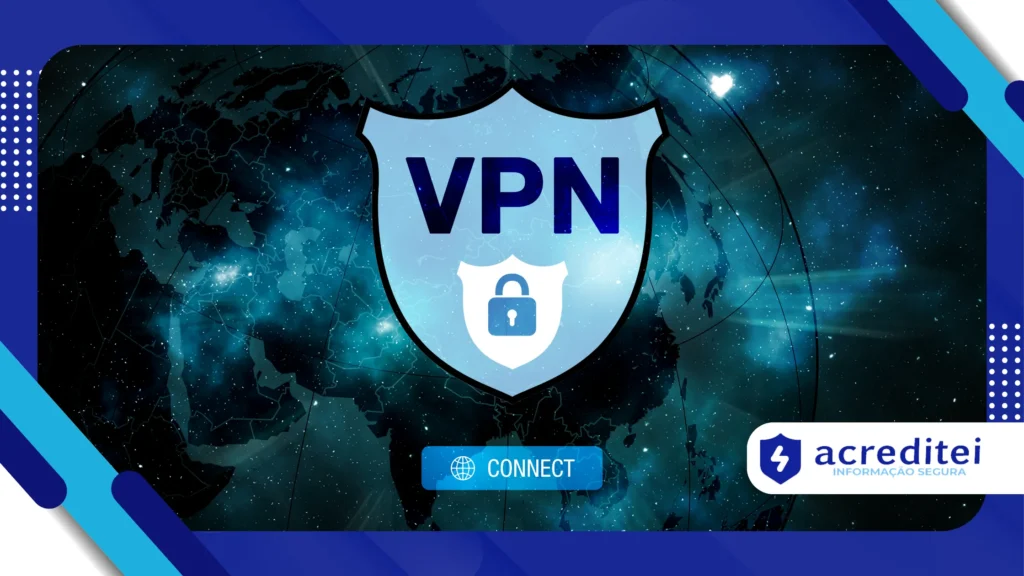
VPN stands for Virtual Private Network. It creates an encrypted connection between your device and the internet, making data traveling through that network invisible.
Adverts
To the use VPN on your cell phone, you prevent your carrier, apps, advertisers, and hackers from knowing exactly what you do online.
The mechanism is simple but powerful: when you activate a VPN, your real IP is replaced by another one, provided by a remote server, which may be in another state or country.
This masks your location and prevents any local surveillance from accessing your traffic.
2. The real risks of unprotected navigation

With the popularization of cell phones as the main tool for accessing the internet — 93% of Brazilians use smartphones to connect, according to IBGE (2024) — the risks have become greater and more sophisticated.
It's common for apps to collect more data than they should, with unrestricted access to your microphone, camera, location, and contacts.
Furthermore, Brazil is one of the countries with the highest incidence of cybercrime.
According to the Kaspersky report, in 2023 alone, more than 4 billion attempted malicious attacks were detected in Latin America, with Brazil responsible for more than half of them.
Without a VPN, your data is vulnerable to attacks like sniffing, DNS spoofing, and targeted malware, especially on open or public Wi-Fi connections.
These methods are invisible to the average user and can compromise everything from passwords to banking information.
3. Public networks and the invisible trap
Using public Wi-Fi networks may seem harmless, but it can be a real risk. In airports, hotels, or cafes, your connection could be intercepted by someone with basic technical knowledge.
The most common technique is the “man-in-the-middle” attack, in which an attacker positions himself between your device and the access point.
Use VPN on your cell phone In these situations, it's like creating a digital shield: encryption turns your connection into a secure tunnel, preventing any type of data reading or theft.
The best part? This happens automatically, requiring no additional actions after activation.
A real-life example occurred in São Paulo, when a group of cybercriminals installed a fake network in a coworking space.
Several users were victims, having their emails hacked and suffering financial losses. With a VPN, this interception would be useless.
+ How to Set Up a More Secure Home Wi-Fi Network
4. Geo-blocking and freedom of access
Another significant benefit is the unblocking of geolocation-restricted content.
Platforms like Netflix, HBO Max, Amazon Prime, and even news sites may display different content depending on the country of access.
If you travel or live outside of Brazil, for example, you may lose access to national content.
Use VPN on your cell phone allows you to simulate that you are in Brazil — or another country — and regain access to your favorite libraries.
This feature is also very useful for professionals who need to access systems or platforms with region-locked IPs.
+ 5 Tips to Protect Your Data on Public Wi-Fi Hotspots
5. How to avoid abusive data tracking
We live in an era of mass data collection. Every click, search, and purchase is monitored by algorithms that create a detailed consumer profile.
Ad personalization is just the tip of the iceberg: there's a whole market for buying and selling personal data happening in the background.
With the VPN enabled, trackers lose direct access to your real IP address, making it difficult to associate your actions with a specific profile.
This does not mean absolute anonymity, but rather more private browsing, free from invasive targeting.
Many users report that when use VPN on your cell phone, the amount of targeted ads decreases considerably.
Therefore, this occurs because cookies and scripts lose some of their ability to track your behavior.
+ How the deep web differs from the dark web — do you really know?
6. Banking and financial security with VPN
Contactless payments, banking apps, digital wallets, and investments: everything now goes through your cell phone.
In a scenario where PIX is used by more than 801,000 Brazilian adults (Central Bank, 2024), protecting these transactions is urgent.
A VPN makes traffic between your banking app and servers encrypted and confidential, preventing interception.
In cases of loss or theft of the device, even if the attacker tries to capture previously transmitted data, they will not have access to the protected information.
In a PwC study, companies with high levels of digital protection suffered 65% fewer cyber frauds than those less prepared. This also applies to individual users.
7. VPN for professionals, students, and travelers
Do you work remotely, study at universities with closed systems, or travel a lot?
So you already know that constant access to specific platforms can be blocked in certain countries. Many journalists, for example, use VPNs to protect sources and maintain anonymity.
The same goes for entrepreneurs who need to access corporate reports or dashboards.
For them, use VPN on your cell phone ensures stable and secure access, even in locations subject to digital censorship. The VPN also allows you to simulate a Brazilian IP address for services that require a local location.
In educational settings, international students report difficulties accessing virtual libraries in other countries. VPNs solve this problem, creating a borderless digital environment.
8. How to choose a good VPN among so many options
Choosing the right VPN may seem simple, but it's a critical decision. Avoid free versions with no logs, as many sell your data.
Choose solutions with a good reputation, advanced encryption (such as AES-256), a no-logs policy, and an international presence.
Among the most recommended options in 2025 are: ExpressVPN, ProtonVPN, NordVPN, and Surfshark. These tools are constantly evaluated by experts and reference publications such as PCMag It is TechRadar.
Also consider technical support, compatibility with your operating system, and connection speed. An effective VPN shouldn't compromise your productivity.
9. The technology behind encryption and the future of protection
The foundation of VPN security is end-to-end encryption. The best services use modern protocols like OpenVPN, WireGuard, and IKEv2/IPSec, which offer speed and security at the same time.
Additionally, some VPNs now adopt quantum encryption or multi-factor authentication as standard. This evolution ensures that protection keeps pace with evolving digital threats.
Experts predict that within a few years, VPN use will be as common as antivirus software. It's a natural trend in light of the increasing digitalization of everyday life.
+ Real benefits of battery saver mode — is it always worth activating?
10. Final considerations and practical guidelines
Protecting yourself online is no longer a luxury, it has become an urgent necessity.
Cell phones are increasingly accumulating more functions: they are banks, calendars, photo albums, work platforms and confidential files. Use VPN on your cell phone It is a simple, affordable and highly effective measure.
Below, check out a table that summarizes the risks and benefits:
| Action on mobile | No VPN (risk) | With VPN (protected) |
|---|---|---|
| Use of public Wi-Fi | Visible data | Encrypted connection |
| Access to banking apps | Vulnerable session | Protected information |
| General navigation | Traceable IP | Masked IP |
| Streaming and content | Restrictions by region | Global access |
| Use of tracking apps | User profile created | Limited tracking |
So, will you still be sailing unprotected in 2025? The answer seems clear. A small gesture today can prevent big problems tomorrow.
For an up-to-date review of the best VPNs on the market, visit this CNET's full comparison.
Frequently Asked Questions about Using a VPN on Your Cell Phone
VPN consumes a lot of battery? Modern VPNs are optimized. The impact on battery life is minimal compared to the protection benefits.
Is it safe to bank with a VPN? Yes. In fact, it's more secure than doing it without. Encryption protects data end-to-end.
Is using a VPN on your cell phone legal in Brazil? Yes, use is permitted and does not violate any Brazilian legislation, as long as it is not used for illegal purposes.
Can I keep the VPN on all the time? Yes. Many users leave their VPN on continuously to ensure constant privacy.
What is the difference between a paid and a free VPN? Paid VPNs offer greater security, speed, technical support, and stability. Free VPNs may have limitations and greater risks.