Tips for enjoying fast and secure Wi-Fi at home or in the office.
Adverts
In this comprehensive guide, we will explore technical and practical strategies to optimize your home or business network.
We will cover everything from the physical placement of the router to the latest layers of encryption.
Summary
- Hardware location optimization.
- Adoption of the Wi-Fi 7 standard.
- Advanced security with WPA3.
- Traffic management and QoS.
- Comparative table of technologies.
- Frequently Asked Questions (FAQ).
What is needed for a high-performance wireless network?
To begin, understand that the speed contracted with the provider is only the starting point. The internal hardware determines how this signal will actually be distributed throughout the environment.
Modern routers that support the 6 GHz bands are essential to avoid channel congestion. By 2026, saturation of the 2.4 GHz and 5 GHz frequencies is common.
Adverts
Furthermore, the physical structure of the property directly influences the propagation of the waves. Dense masonry walls, mirrors, and even aquariums can act as significant barriers to the signal.
The application of Tips for enjoying fast and secure Wi-Fi. It requires a critical look at where the equipment is installed. Ideally, it should occupy a central and elevated position.
How does the Wi-Fi 7 standard transform the user experience?
Wi-Fi 7, or IEEE 802.11be, introduced Multi-Link Operation (MLO), allowing devices to send and receive data simultaneously on different frequencies, drastically reducing latency.
This technology is a game-changer for those who use augmented reality or conduct 8K video conferencing. It ensures that the connection remains stable even in densely populated environments.
By investing in compatible equipment, you ensure that your infrastructure can support the increased demand of the coming years. The 320 MHz channel width doubles the previous throughput.
Follow the Tips for enjoying fast and secure Wi-Fi. This necessarily involves upgrading to standards that offer greater spectral efficiency and less interference from neighboring networks.
Why is WPA3 security indispensable today?
The protection of personal and corporate data cannot be neglected, especially with the rise of brute-force attacks. The WPA3 protocol replaced the older WPA2 with critical improvements.
Unlike its predecessor, WPA3 uses Simultaneous Peer Authentication (SAE), which offers robust protection even if the user's chosen password is not complex.
This prevents attackers from intercepting data traffic to try to discover offline credentials. Link layer security is the first line of defense against unauthorized network access.
Implement these Tips for enjoying fast and secure Wi-Fi. ensures that IoT devices, which are often vulnerable, do not become entry points for cybercriminals into your home.
++ Tech tips for those who work with multiple accounts, logins, and platforms.
What are the best router configuration practices?
Adjusting internal firmware settings can yield significant speed gains. Disabling legacy features, such as support for very old devices, frees up bandwidth for the system.
Quality of Service (QoS) is a powerful tool that prioritizes traffic for critical applications. You can set video calls to take precedence over large file downloads.
Keeping firmware up-to-date is another vital measure. Manufacturers constantly release patches for discovered vulnerabilities and driver improvements that optimize data packet processing.
You can check the detailed technical specifications and safety guides on the portal. Wi-Fi Alliance, a global organization that sets standards for wireless technology.
When should you use mesh networks instead of traditional repeaters?
In large or obstructed buildings, a single router is rarely sufficient. Conventional repeaters create subnets that often reduce the overall connection speed by half.
Mesh systems utilize multiple nodes that communicate intelligently, creating a single, fluid network. The device automatically connects to the point with the strongest and most stable signal.
This topology eliminates "dead zones" and allows you to move around the office without experiencing connection drops. It's the ultimate solution for extensive coverage with high density.
Follow the Tips for enjoying fast and secure Wi-Fi. This means choosing the network architecture that best suits the floor plan of your daily use location.
++ Simple tech tips for beginners
Comparison of Wi-Fi Technologies in 2026
The table below presents the actual technical data that differentiates the generations of wireless technology available on the market today, helping you choose the ideal hardware for your needs.
| Technology | Frequencies Used | Maximum Theoretical Speed | Main Benefit |
| Wi-Fi 5 (802.11ac) | 5 GHz | 3.5 Gbps | Cost-effective for simple networks |
| Wi-Fi 6 (802.11ax) | 2.4 / 5 GHz | 9.6 Gbps | Efficiency in environments with many devices. |
| Wi-Fi 6E (802.11ax) | 2.4 / 5 / 6 GHz | 9.6 Gbps | Access to the 6 GHz band for less interference. |
| Wi-Fi 7 (802.11be) | 2.4 / 5 / 6 GHz | 46 Gbps | Ultra-low latency and multi-link (MLO) operation |
How can I protect my network against unauthorized access?
In addition to strong encryption, hiding the SSID (network name) can discourage opportunistic attacks. However, MAC address control offers an extra layer of customization and constant monitoring.
Creating a secluded guest network is one of the best Tips for enjoying fast and secure Wi-Fi.. This prevents visitors from accessing your shared files and sensitive devices.
Regularly monitor the list of connected devices through your router's app. Identifying unknown devices early allows you to block intruders before any real damage occurs to your data integrity.
Change the default hardware administration passwords immediately after installation. Many successful attacks occur because users keep the factory “admin/admin” credentials accessible over the network.
++ How to speed up an old laptop without formatting or replacing hardware.
What is the impact of antenna placement on the signal?
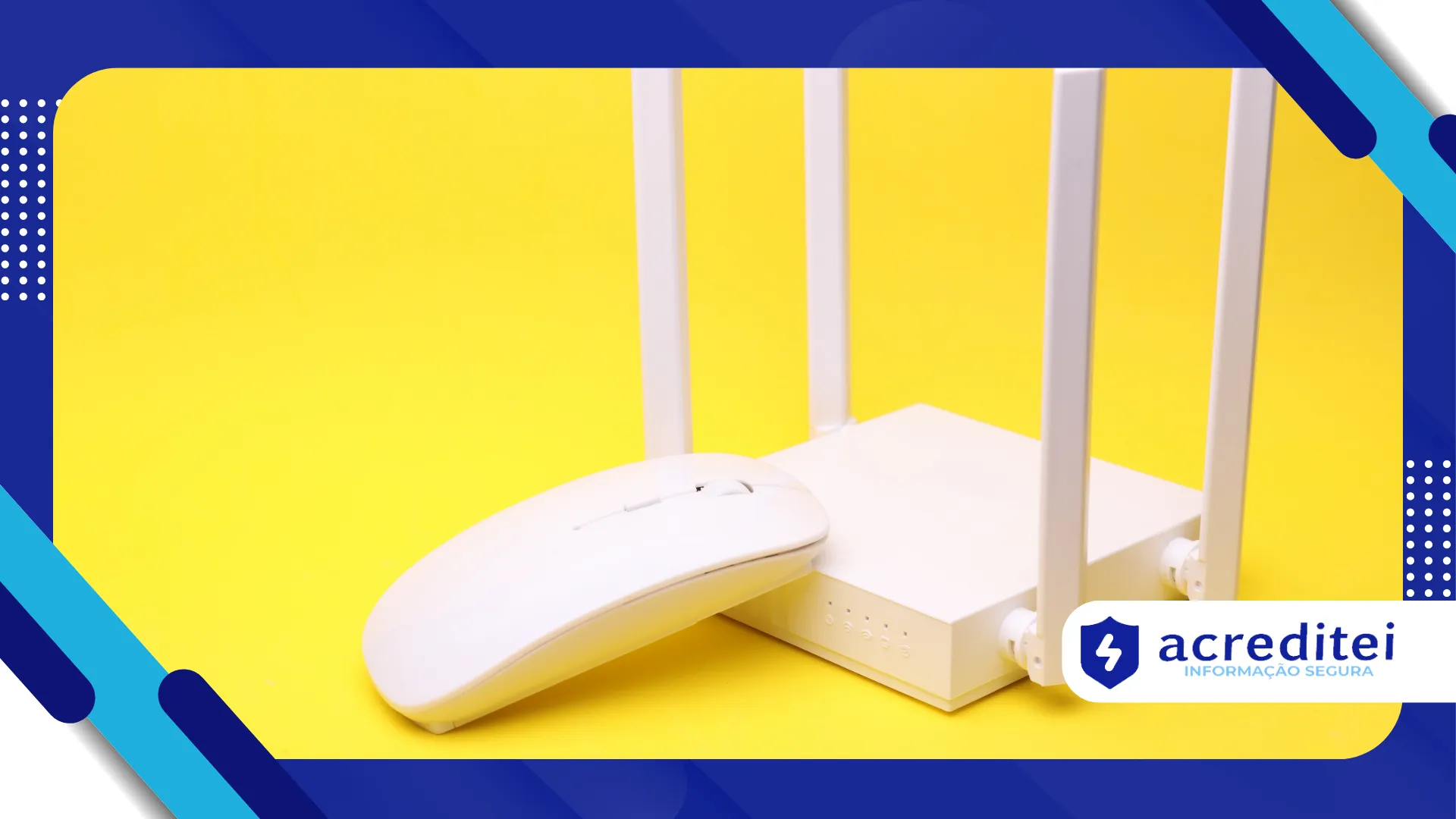
Many people are unaware that the orientation of physical antennas influences how the signal propagates through the air. If the router has multiple antennas, position them at different angles for greater coverage.
Placing equipment inside cabinets or behind televisions is a common mistake that degrades performance. The heat generated by other electronics can also cause slow processing.
Make sure the router is kept away from microwave ovens and old cordless phones. These devices operate on the 2.4 GHz frequency and cause severe electromagnetic interference.
When applying these Tips for enjoying fast and secure Wi-Fi., By doing so, you ensure that each contracted megabit reaches its final destination with the highest possible reliability and power.
Conclusion
Achieving an excellent connection requires a balance between modern hardware, intelligent configuration, and rigorous digital hygiene.
Constant technological evolution demands that we revisit our network definitions periodically.
When implementing the Tips for enjoying fast and secure Wi-Fi. As presented, you transform your digital experience, ensuring productivity at work and uninterrupted entertainment for the whole family or team.
For more information on Brazilian telecommunications standards and device certification, visit the official website of [Company Name/Organization Name]. Anatel, which regulates the sector in Brazil.
Frequently Asked Questions (FAQ)
How do I know if my router is compatible with Wi-Fi 7?
Check the product box or technical manual for the designation “802.11be”. Additionally, connected devices must also support this standard to take advantage of the maximum speed.
Does changing the Wi-Fi channel really help with speed?
Yes, especially in buildings where many networks operate simultaneously. Using spectrum analysis applications allows you to identify less congested channels, improving stability and throughput.
Does using a VPN reduce my Wi-Fi speed?
Yes, the encryption process and routing through external servers add a layer of processing. However, for security on public networks, this small sacrifice in speed is highly recommended.
What is the difference between the 2.4 GHz and 5 GHz bands?
The 2.4 GHz frequency has a greater range and penetrates walls better, but it is slower. The 5 GHz frequency offers higher speeds, but has limited range and less penetration.