Does UFS storage make your phone faster for everyday use?
Adverts
The adoption of UFS Storage It redefined the speed of modern smartphones, directly influencing app opening speed, video recording efficiency, and everyday multitasking performance.
Unlike the older eMMC standard, this flash memory technology uses bidirectional buses that allow simultaneous reading and writing of digital data without creating operational bottlenecks.
Understanding the practical impact of this memory architecture helps consumers choose the ideal device, avoiding annoying freezes and ensuring maximum longevity for their technology investment.
We will analyze how this technology works, its recent developments, and the real benefits it delivers to those seeking a fast and highly responsive cell phone for everyday use.
Adverts
What is this technology and how does it speed up the smartphone?
Formally known as Universal Flash Storage, This technology functions as an ultra-compact solid-state drive specifically designed to operate in advanced mobile devices.
The main innovation of UFS Storage resides in the support for the protocol. Full Duplex, allowing simultaneous reading and writing of files in the operating system.
The old eMMC standard worked in mode Half Duplex, requiring the phone to switch between reading or writing data, which caused noticeable slowdowns in demanding tasks.
Thanks to this continuous parallel communication, the processor accesses essential files with less latency, making system navigation smoother, faster, and more enjoyable.
How does memory performance impact a user's daily tasks?
The time spent opening resource-intensive applications, loading complex games, or switching between screens is drastically reduced when sequential memory read speed is increased.
Recording videos in 4K resolution at 60 frames per second requires continuous recording of large volumes of data without stuttering in the device's internal memory.
Smartphones equipped with modern modules transfer large files to computers via cable in a matter of seconds, optimizing the routine of those who constantly produce mobile content.
Virtual RAM management also depends on the speed of this component, ensuring that applications running in the background reopen instantly without restarting the application.
Technical Comparison: Evolution of Flash Memory Generations
| Storage Standard | Average Reading Speed | Average Writing Speed | Recommended Application Profile |
| eMMC 5.1 | Up to 330 MB/s | Up to 200 MB/s | Entry-level smartphones and basic devices |
| UFS 2.2 | Up to 1,000 MB/s | Up to 260 MB/s | Mid-range cell phones focused on cost-effectiveness. |
| UFS 3.1 | Up to 2,100 MB/s | Up to 1,200 MB/s | Advanced mid-range and previous top-of-the-line models |
| UFS 4.0 | Up to 4,200 MB/s | Up to 2,800 MB/s | Modern flagships, demanding games, and AI on the device. |
What are the practical differences between the standards available on the market?
While the UFS 2.2 standard perfectly meets the needs of conventional users, versions UFS 3.1 and 4.0 deliver transfer rates that surpass many desktop computer SSDs.
The UFS 4.0 version consumes almost half the electrical power of its direct predecessor, helping to preserve daily battery life during intensive tasks.
Read more: Enable automatic captions on your smartphone for greater accessibility.
The extended bandwidth of the latest versions enables local processing of generative artificial intelligence models directly on the smartphone's own hardware.
To keep up with official technical specifications and global updates from the semiconductor industry, visit the [link/website/resource]. JEDEC Solid State Technology Association.
Why does typing speed affect cell phone durability?
Writing data quickly and efficiently prevents overheating of the processor and memory chips during the installation of new applications and system updates.
The wear and tear on flash memory cells occurs more evenly when the internal controller manages write operations with high energy efficiency.
Know more: How did the popular Ctrl+C and Ctrl+V shortcuts come about?
Common UFS Storage Modern phones maintain their original performance even after years of continuous use and with their internal memory almost full.
This prevents the device from experiencing progressive slowdown, a very common problem in older devices that used previous generation storage technologies.
How do I identify the type of memory when buying a new device?
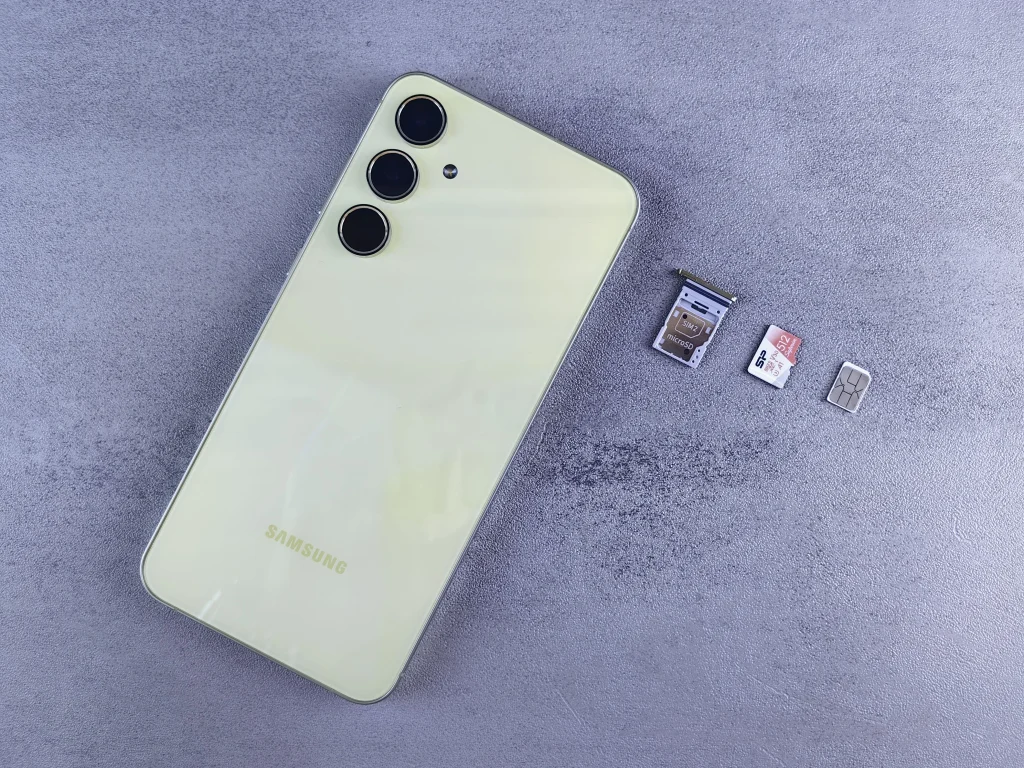
Manufacturers often highlight the presence of this technology in the official product specifications, prioritizing the terms UFS 3.1 or UFS 4.0 in premium models.
Consult expert technical analyses and reading benchmark tests before making a purchase decision, ensuring that the chosen model meets your daily expectations.
Read more: Automatically sync photos between your phone and storage.
Avoid buying smartphones that still use the eMMC 5.1 standard if your goal is to play games, record high-resolution videos, or keep the device for many years.
To access independent analyses of mobile hardware, processor benchmarks, and cutting-edge technology, explore the platform of AnTuTu Benchmark.
Frequently Asked Questions (FAQ)
Does UFS storage consume more battery power than eMMC?
No, recent generations of UFS deliver significantly higher energy efficiency, transferring data faster and returning to sleep in less time.
Is it possible to upgrade the UFS memory of an old smartphone?
That's not possible, because the flash memory chips are soldered directly onto the device's motherboard during the smartphone's industrial manufacturing process.
Does the internal memory size in GB affect read speed?
In general, models with higher storage capacity (such as 256 GB or 512 GB) have more parallel communication channels, delivering slightly higher speeds.
Does memory speed affect mobile gaming?
Yes, faster memory significantly reduces loading screens (loading) and prevent momentary freezes when loading complex scenarios during the game.
Investing in a smartphone with UFS Storage Modern technology ensures a noticeable improvement in daily performance and extends the device's lifespan. This technical choice protects your budget and enhances your digital experience.