
Are modern dual-band routers still worth the investment?
Adverts
Modern dual-band routers They continue to dominate residential connectivity choices, offering an impeccable balance between wide range, stable speed, and affordability for most homes.
With the advancement of Wi-Fi 6 and Wi-Fi 7, many consumers are questioning whether dual-band equipment can still meet the growing demands of 4K streaming and remote work.
The short answer is yes: for the vast majority of Brazilian households, dual-band technology has evolved significantly, incorporating fast processors and high-performance smart antennas.
Understanding the role of these frequencies helps you make a smart financial decision, avoiding unnecessary spending on tri-band networks that require extremely expensive and complex infrastructure.
Adverts
What are dual-band devices and how do they operate?
These devices transmit wireless internet signals using two distinct radio frequencies simultaneously: the 2.4 GHz band and the 5 GHz band.
The lower frequency offers a much greater physical range, easily overcoming walls and physical barriers, although it operates at more modest transfer speeds.
In contrast, the 5 GHz frequency delivers significantly higher transfer rates and lower latency, sacrificing only a fraction of its total spatial coverage.
The great triumph of current technology is to automatically switch your devices between these two frequencies, always guaranteeing the best possible connection without any manual intervention.
Why does the 5 GHz frequency outperform older networks?
The 5 GHz band has a much wider and less congested channel spectrum than the older, traditional 2.4 GHz frequency.
Common household appliances, such as cordless phones and microwaves, operate at 2.4 GHz, generating constant electromagnetic interference that impairs the stability of your daily online browsing.
By migrating smart TVs, laptops, and video game consoles to the 5 GHz band, data transmission occurs on clean channels without digital congestion.
Follow the technical specifications and certifications of telecommunications equipment at Anatel Portal to ensure that their equipment meets national emission standards.
Performance Comparison Between Router Standards
| Wi-Fi Standard | Frequencies Used | Maximum Theoretical Speed | Average Latency | Suitable for |
| Wi-Fi 5 (802.11ac) | 2.4 GHz and 5 GHz | Up to 3.5 Gbps | 20 – 30 ms | Internet plans up to 300 Mbps |
| Wi-Fi 6 (802.11ax) | 2.4 GHz and 5 GHz | Up to 9.6 Gbps | 10 – 15 ms | Connected homes and online gaming |
| Wi-Fi 6E (802.11ax) | 2.4 GHz, 5 GHz and 6 GHz | Up to 9.6 Gbps | 7 – 10 ms | Dense corporate environments |
| Wi-Fi 7 (802.11be) | 2.4 GHz, 5 GHz and 6 GHz | Up to 46 Gbps | Less than 5 ms | Professional use and extreme automation. |
What practical advantages will these devices offer in 2026?
The update to modern dual-band routers Equipped with native Wi-Fi 6 support, they bring advanced technologies like MU-MIMO and OFDMA directly to your home.
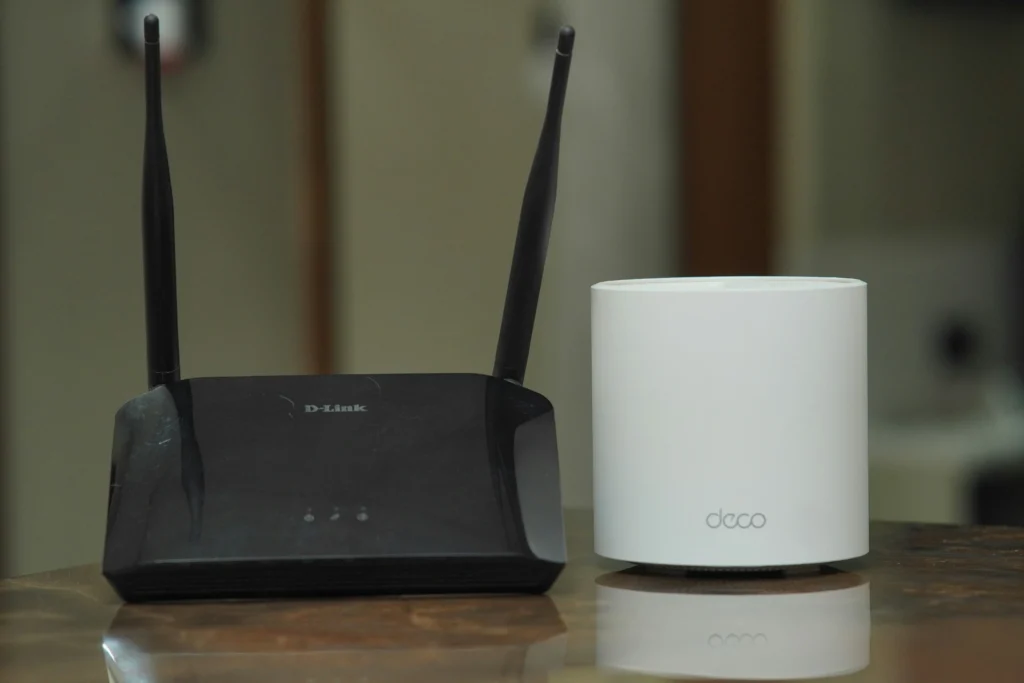
These features allow the router to communicate with dozens of portable devices simultaneously, eliminating the virtual queues that used to block older transmissions.
Read more: Protect your home Wi-Fi network against unauthorized access.
The energy consumption of your smartphones also decreases considerably thanks to the feature. Target Wake Time, which manages when the receiving antennas should go to sleep.
Furthermore, home security receives a robust boost with the mandatory inclusion of the WPA3 protocol, protecting your network against intrusions and data interception.
How do you know when it's worth investing in tri-band or mesh headbands?
Large houses with multiple floors or families that connect more than fifty smart devices at the same time may experience bottlenecks with dual-band routers.
Tri-band technology adds a second 5 GHz frequency or a new 6 GHz band, creating a dedicated express lane for communication between nodes.
Know more: How to measure your real internet speed
However, for standard apartments and single-family homes with broadband plans of up to 1 Gigabit, modern dual-band delivers all the necessary performance.
Investing in the right technology avoids excessive spending on corporate resources that your internet provider or current electronic devices can't even fully utilize.
When should you replace your old internet equipment?
If your contracted internet speed exceeds 100 Mbps, but your provider's router continues to freeze during video calls, a replacement is urgently needed.
Read more: Share your mobile internet with a more stable signal.
Outdated devices limit the actual speed delivered to your room, creating processing bottlenecks that prevent you from fully utilizing the bandwidth you've contracted for.
Check out the hardware reviews and network infrastructure tests published by Wi-Fi Alliance to understand the official certification of connectivity equipment.
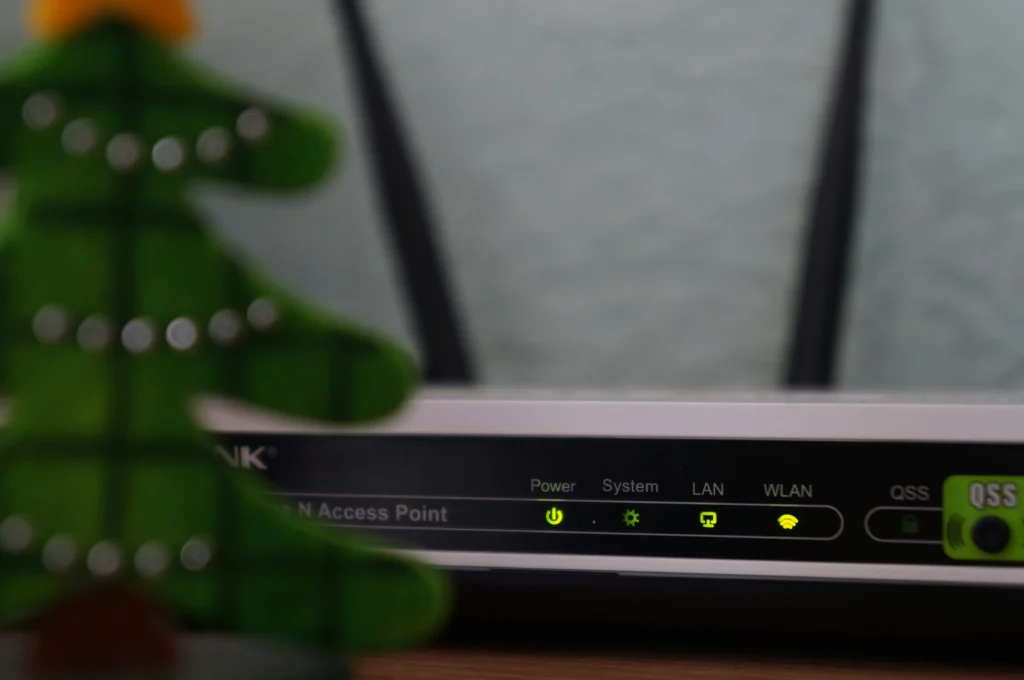
Replacing an old router with an updated dual-band model instantly solves weak signal problems, ensuring smooth coverage in every room of the house.
Frequently Asked Questions (FAQ)
Do dual-band routers work with any internet plan?
Yes, they are compatible with any broadband provider; simply connect the network cable from the provider's modem to the WAN port.
What is the real difference between the frequencies of 2.4 GHz and 5 GHz?
The 2.4 GHz frequency penetrates walls more easily, but is slower; while the 5 GHz frequency delivers very high speeds over short distances.
Do I need to replace my network cables when I buy a new router?
To enjoy speeds above 100 Mbps, be sure to use Cat5e or Cat6 network cables when connecting your main devices.
Can a dual-band router cover an entire two-story house on its own?
In buildings with multiple floors or very thick walls, it is recommended to create a mesh network using two integrated dual-band wireless routers.
Purchase modern dual-band routers It remains the smartest investment for those seeking stability, high speed, and excellent cost-effectiveness in home networks. Choosing the right model ensures flawless connectivity for all your devices without breaking the family budget.