
When did cell phones start having cameras?
Adverts
Discover exactly when the Cell phones started having cameras. Integrated images reveal the incredible technological transformation that has forever changed social communication, journalism, and global photography.
The turning point in the convergence between mobile telephony and image capture occurred at the turn of the millennium, marking the definitive transition from analog phones to advanced multimedia devices.
Understanding this historical evolution helps to appreciate the capabilities of today's smartphones, which combine artificial intelligence with high-resolution optical sensors to produce professional images.
What were the first camera phone models in the world?
The pioneering role in mobile photography is often attributed to the Kyocera Visual Phone VP-210 model, launched in Japan in May 1999 with an integrated front camera.
Adverts
That pioneering Japanese device could store up to twenty images in JPEG format and processed live video streams at a modest rate of two frames per second.
The following year, in June 2000, Samsung launched the SCH-V200 in the South Korean market, allowing users to take up to twenty photos with a resolution of 0.3 megapixels.
However, the SCH-V200 model required a connection to a computer to access the digital files, preventing the direct transmission of images over the mobile phone network of the time.
The Sharp J-SH04, marketed in Japan in late 2000 by the J-Phone operator, popularized the infrastructure that allowed users to instantly capture and send photos via email.
How has image sensor technology evolved over the decades?
Early devices used extremely simple CMOS sensors, capable of recording images with low light sensitivity and significant visual noise in environments with little natural light.
The constant evolution of microelectronics allowed for the replacement of these components with higher-fidelity CCD sensors, before the CMOS architecture returned with impressive gains in energy efficiency.
Over the years, the industry has introduced autofocus, LED flash, and complex lenses with multiple apertures, optimizing the dynamic range of each image captured by the user.
To understand how the Cell phones started having cameras. Increasingly sophisticated and efficient, consult the technological collection of IEEE Spectrum, a global authority in engineering.
This trajectory has allowed optical modules to occupy increasingly smaller spaces in devices, enabling the ultra-thin design of the smartphones we use daily in the modern world.
Below, we present a comparative table with real historical data detailing the technical evolution of mobile cameras, highlighting the year of release, flagship model, resolution, and impact.
| Release Year | Iconic Model | Maximum Resolution | Key Innovation |
| 1999 | Kyocera VP-210 | 0.11 Megapixel | First integrated front camera for video calls. |
| 2000 | Sharp J-SH04 | 0.11 Megapixel | Direct image transfer via mobile network (Sha-Mail) |
| 2002 | Nokia 7650 | 0.3 Megapixel (VGA) | Popularization of mobile photography in the European and global markets. |
| 2007 | Nokia N95 | 5.0 Megapixels | Carl Zeiss lenses, autofocus, and video recording. |
Analyzing this technical timeline demonstrates the astonishing speed with which the mobile industry has transformed a secondary function into the central pillar of today's consumer experience.
Why has the integration of cameras transformed societal behavior?
The ability to carry a camera permanently in one's pocket has democratized the visual documentation of daily life, transforming ordinary citizens into instant producers of impactful content and news.
The emergence of image-based social networks has driven the search for devices with high-quality front-facing lenses, solidifying the cultural phenomenon of selfies worldwide.
Rapid communication platforms have begun to prioritize visual sharing, replacing lengthy text messages with ephemeral photographic records or high-definition live video broadcasts.
Knowing the exact time when the Cell phones started having cameras. It makes us reflect on how photography has gone from being a rare record to becoming an everyday language.
Real-time documentation of historical events and urban problems has also strengthened press freedom, offering transparency and speed in transmitting information to the public.
When did smartphones replace dedicated compact cameras?
Between 2010 and 2015, smartphones reached a level of visual quality that made portable point-and-shoot cameras virtually obsolete for the average consumer.
Innovations such as optical image stabilization, multi-lens arrays, and large sensors have made it possible to capture photos with impressive sharpness even under adverse lighting conditions.
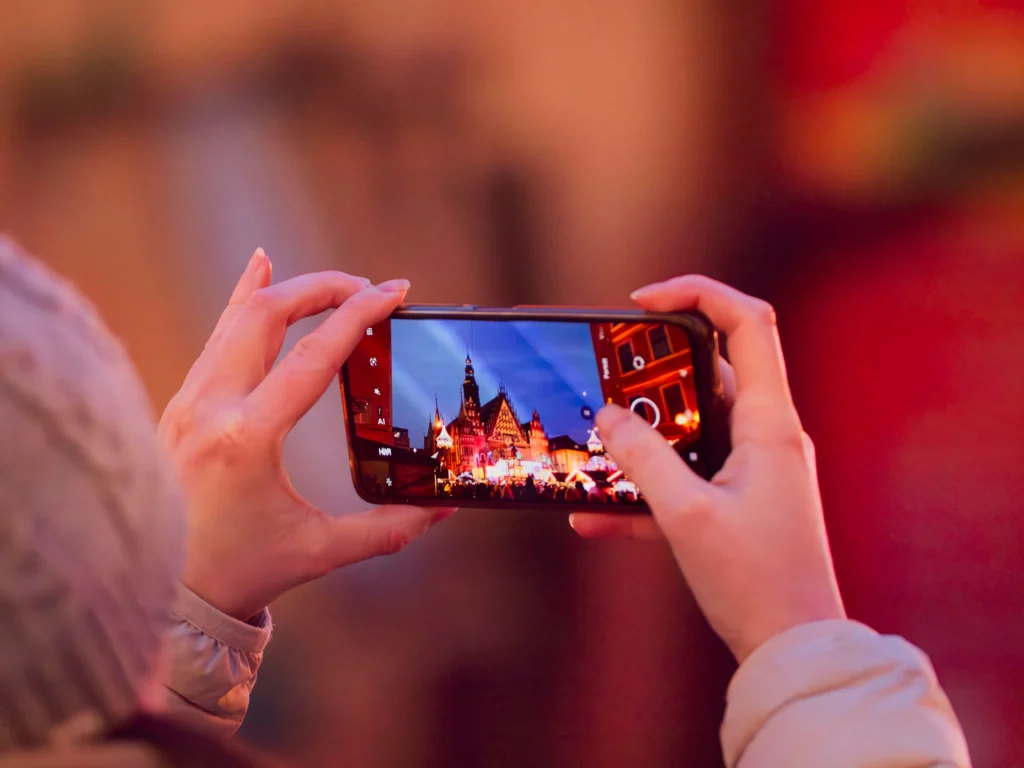
Read more: Waterproof Cell Phones: Myths and Truths You Need to Know
The introduction of computational photography has enabled intelligent algorithms to process images in milliseconds, combining multiple exposures to perfectly balance light, shadows, and colors.
This technological revolution drastically reduced sales of entry-level dedicated cameras, concentrating the professional photography market on advanced equipment with high-cost interchangeable lenses.
The convenience of editing photos on the phone itself and sharing them instantly sealed the public's preference for cell phones over traditional travel cameras.
What is the future of mobile photography with artificial intelligence?
Contemporary mobile photography relies heavily on neural processing units integrated into chipsets, capable of recognizing scenes, adjusting skin tones, and eliminating noise with surgical precision.
Modern features allow you to change the focus after capture, artificially recreate studio lighting, and remove unwanted objects from the scene with just a few taps on the device's panel.
Know more: The Best Camera Phones for Amateur Photographers in 2025
Sensors with hundreds of megapixels and periscope zoom systems with impressive optical range ensure detailed recordings of distant objects without losing sharpness and color fidelity.
To explore detailed studies on digital optical sensors, semiconductors, and advances in computational photography, access the repository of... Nature Electronics.
The future of image capture on mobile phones will continue to expand the boundaries of what is possible, combining precision optics with cutting-edge algorithmic processing without limits.
A visual revolution in the palm of your hand.
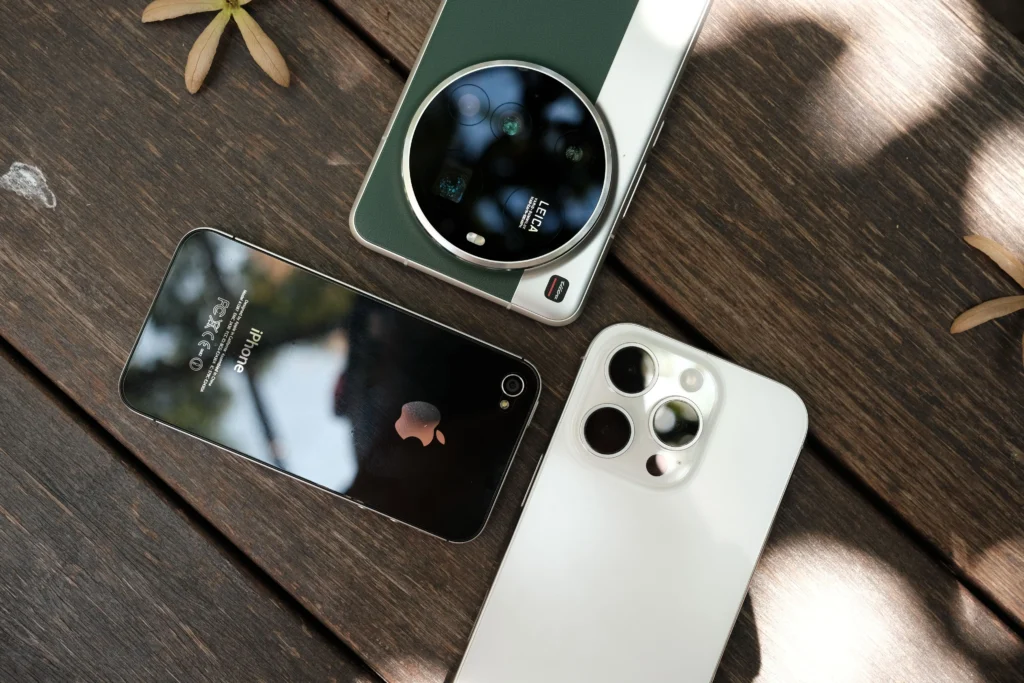
The inclusion of photographic lenses in mobile phones has permanently altered the history of technology, redefining human relationships, mass communication, and the documentation of the world.
Read more: Mobile neural chips and smarter cell phones
From the modest 0.11-megapixel resolution of the 1990s to today's advanced systems with artificial intelligence, the evolution of mobile cameras continues to shape modern society daily.
Understanding this trajectory allows us to appreciate each photographic record and anticipate the incredible innovations that image engineering will bring to our smartphones in the coming years.
FAQ (Frequently Asked Questions)
What was the first cell phone with a camera released on the commercial market?
The Kyocera Visual Phone VP-210, released in Japan in May 1999, is considered the first mobile phone with an integrated front camera for photos and videos.
Who came up with the idea of combining a camera with a mobile phone?
Entrepreneur Philippe Kahn is widely credited with creating the first functional system in 1997, by connecting a digital camera to a mobile phone to transmit a photo of his newborn daughter.
What was the first cell phone with a camera to be sold in Brazil?
The Nokia 7650, launched in Brazil in the second half of 2002, was the device responsible for introducing mobile photography with an integrated VGA camera to Brazilian consumers.
Why were the photos from early cell phones so low quality?
Early cell phones used very small CMOS sensors, without complex glass lenses or digital processing, resulting in very low resolution and poor natural light capture.