The end of passwords? Understand the growth of passkeys.
Adverts
The digital security landscape in 2026 confirms the accelerated pace of change. growth of passkeys as the definitive standard to replace the vulnerable character sequences we've used for decades in our accounts.
Navigating the internet today requires protection that goes beyond human memory, prioritizing cryptographic methods that combine extreme convenience with a virtually impenetrable layer of defense against cyberattacks.
This technological transition is not just a passing trend, but a structural change supported by the biggest giants in global technology.
By eliminating the need to memorize complex codes, we drastically reduce the success of phishing scams and identity theft.
Adverts
In this article, we detail how this technology works, why it has become essential, and what to expect from this new passwordless era.
Why is biometrics more secure than alphanumeric passwords?
Human error is the main cause of security incidents, as we tend to reuse simple passwords or write them down in unprotected and easy-to-find locations.
Passkeys eliminate this factor, as they rely on physical hardware and facial or fingerprint recognition, elements that are intrinsic to the user and difficult to replicate.
Furthermore, since there is no code to type in, the risk of being scammed by fake websites that mimic banks or social networks disappears completely.
The digital key only works within the real domain for which it was created, preventing you from accidentally handing your credentials over to a criminal.
To better understand the technical specifications of these authentication standards, visit the official website of FIDO Alliance It offers detailed documentation on how these protocols protect billions of users globally.
This technical transparency is fundamental to building the necessary trust between consumers and digital service providers.
Security and Usability Comparison (Data 2026)
| Feature | Traditional Password | Authentication via Passkey |
| Storage | Website server (vulnerable) | User device (protected) |
| Phishing Resistance | Download (user can type) | High (nothing to type) |
| Forgetfulness | Frequent (requires recovery) | Non-existent (uses biometrics) |
| Reuse Risk | High (same password for everything) | Zero (unique key per site) |
| Login Time | 15 to 30 seconds | 2 to 5 seconds |
How has support from Big Tech companies driven this technology?
Google, Apple, and Microsoft have joined forces to integrate passkeys natively into their operating systems, allowing the key to be synchronized via the cloud in encrypted form.
This collaboration was the main driving force behind the growth of passkeys, ensuring that the user has access to their accounts on different devices.
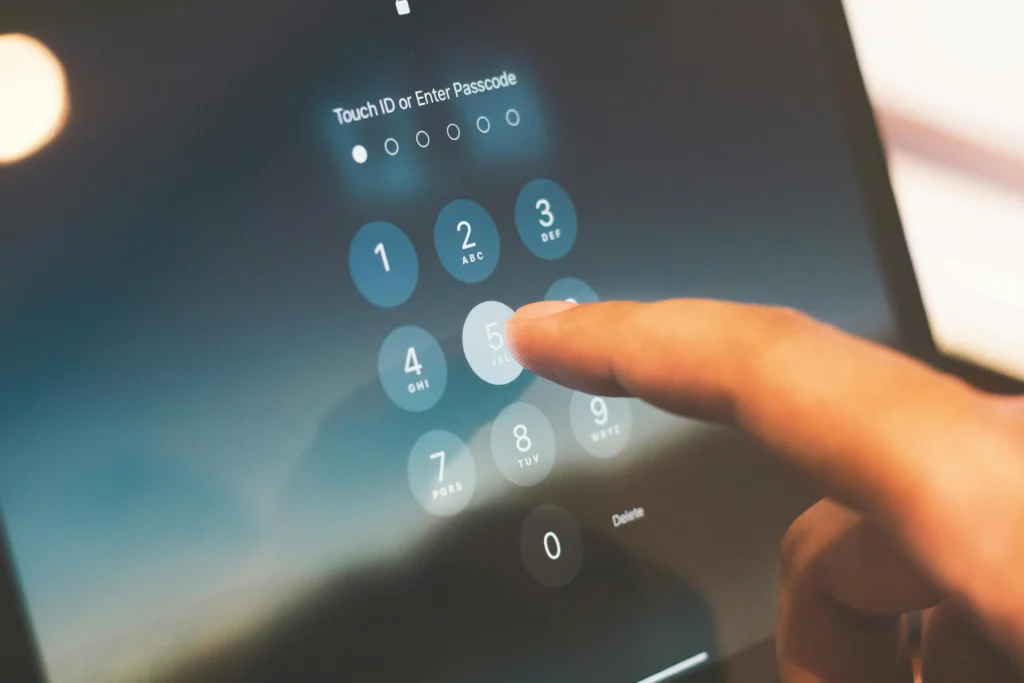
When you set up a key on your iPhone, for example, it becomes available on your Mac or iPad through iCloud Keychain, maintaining end-to-end security.
In the Android and Windows ecosystems, the process follows a similar logic, making the transition easier for those who own devices from various brands at home.
Brazilian e-commerce companies and banks have also accelerated the implementation of this technology to reduce costs associated with supporting and recovering lost accounts.
By offering a faster login method, these platforms see an increase in sales conversion, as friction at checkout is significantly reduced.
What are the main challenges to full adoption by 2026?
Despite all the benefits, the complete transition requires that older websites and legacy systems update their infrastructures to support the new communication protocols.
Many developers are still adapting their interfaces to explain to less technical users how to set up and manage their digital keys without confusion.
Read more: Benefits of putting a password on your phone apps — even with a screen lock
Another point of attention is the interoperability between different password managers and file systems, ensuring that the user is not locked into a single vendor.
Fortunately, the industry has been moving towards open standards that allow for the secure export and import of these credentials between competing platforms in the marketplace.
We observed that the growth of passkeys It also depends on educational campaigns that demystify the fear of losing your cell phone and being without access to your accounts.
Having robust recovery methods, such as physical security keys or trusted contacts, is essential for the public to feel completely secure during the migration.
How to set up your first passkeys in a practical way?
The activation process is usually very simple and can be done in the security settings of the websites you already use daily.
Generally, you just need to look for the "Sign in with Passkey" or "Passwordless Security" option and follow the on-screen instructions to register your current device.
Once registered, the next time you visit this website, it will only require you to touch the fingerprint sensor or use facial recognition.
Know more: How to find out if your password has been leaked online
There is no need to receive codes via SMS, which are expensive for companies and can be intercepted by hackers using SIM swapping techniques.
We suggest you start with the most critical accounts, such as your main email and financial apps, where the impact of a hack would be devastating to your personal life.
As you get used to the speed of the process, the reliance on old passwords will begin to seem like an unnecessary and archaic burden.
The future of digital identity is frictionless.
The path to a safer internet necessarily involves making passwords obsolete and strengthening methods based on hardware and biometrics.
Read more: Digital passkey technology and the end of traditional passwords.Onais
O growth of passkeys This proves that technology has finally found a real balance between what is easy for humans and difficult for malicious machines.
In 2026, looking back and remembering the time when we needed to write down codes on paper seems as distant as the use of dial-up connections.

Protecting your digital identity is now a task that takes seconds, allowing you to focus on what really matters while your device silently takes care of defending your data.
To stay up-to-date on information security and data protection guidelines in Brazil, visit the portal of... CGI.br, which coordinates internet governance initiatives in the country.
Staying informed is the first and most important layer of protection any digital citizen can have in an increasingly connected world.
FAQ: Frequently Asked Questions
What happens if I lose the phone where the passkey is configured?
Most modern systems synchronize your passkeys to the cloud (Google Password Manager, iCloud, or Microsoft Account). When you sign in to a new device with your primary account, the keys are automatically restored. Additionally, you can keep traditional recovery methods active as a backup.
Do passkeys work on any computer or browser?
They work on the vast majority of modern browsers such as Chrome, Safari, Edge, and Firefox, provided the operating system is at least minimally up-to-date. If the computer does not have biometrics, you can use your cell phone to scan a QR code and authorize access securely.
Can companies steal my fingerprint using PassKey?
No. The biometric sensor on your device only confirms to the system that you are you. The image of your fingerprint or face never leaves the hardware security chip and is not sent to the website or the Passkey developer.