Digital passkey technology and the end of traditional passwords.
Adverts
A Digital passkey technology This represents the definitive milestone in the transition to a passwordless internet, offering a layer of security that eliminates the main vulnerability of almost all modern cyberattacks.
By 2026, large technology ecosystems like Google, Apple, and Microsoft will have consolidated this infrastructure, allowing users to replace complex character sequences with biometric authentication or physical hardware keys.
In this article, we will detail how this technical standard revolutionizes the login experience, ensuring protection against phishing and brute-force attacks.
We will examine the practical operation of the keys, the operational advantages for companies, and the direct impact on the privacy of the average Brazilian consumer, who is now seeking faster and more resilient access methods.
Adverts
What is passkey technology and how does it work in practice?
Passkey is a digital credential based on open standards from the FIDO Alliance and the W3C consortium, designed to replace traditional passwords with unique cryptographic keys.
When you use the Digital passkey technology, The system generates a key pair: one public key, stored on the service server, and one private key, stored on your device.
Unlike passwords, a private key never leaves your personal device and is not shared with the website or application during the authentication process.
Login occurs through a cryptographic challenge that your device solves using biometrics or the operating system's own screen lock PIN.
This architecture ensures that, even in a scenario of large-scale data leakage on the server, criminals will only obtain useless public keys.
Without the physical private key, securely stored in the hardware of your mobile phone or computer, unauthorized access becomes mathematically impossible.
Why are passkeys immune to phishing and social engineering attacks?
Phishing remains the most effective method for stealing credentials, as it relies on tricking the user into voluntarily revealing their password.
However, the Digital passkey technology It is inherently linked to the actual domain of the website for which it was originally created by the security platform.
If a criminal creates a fake page identical to your bank's, the browser or operating system will detect that the domain does not match the credentials.
Since the user doesn't need to type anything, there's no "secret" that can be given to the attacker, completely neutralizing any attempt to capture data.
Authoritative websites such as the portal of FIDO Alliance They document how this technical standard removes the weakest link in the chain: the human factor.
By automating website authenticity verification, the technology protects even users least familiar with modern cybercrime tactics.
Traditional Passwords vs. Passkeys (Data from 2026)
| Feature | Traditional Passwords | Digital Passkeys |
| Vulnerability to Phishing | High (User may be deceived) | Null (Native domain binding) |
| Memory Complexity | High (Requires special characters) | Null (Based on biometrics/PIN) |
| Risk of Data Leakage | Critical (Servers store hashes) | Minimum (Servers hold public keys) |
| Authentication Speed | Slow (Manual typing) | Instant (Facial/fingerprint recognition) |
| Multi-device support | Manual (Requires password managers) | Automatic (Secure cloud synchronization) |
How do I set up and manage my passkeys across different devices?
The current implementation allows you to set up a passkey in seconds, usually through the security settings of your Google account, Apple ID, or Microsoft account.
By choosing Digital passkey technology, The system will then ask you to use your device's biometrics to validate the creation of the new access credential.
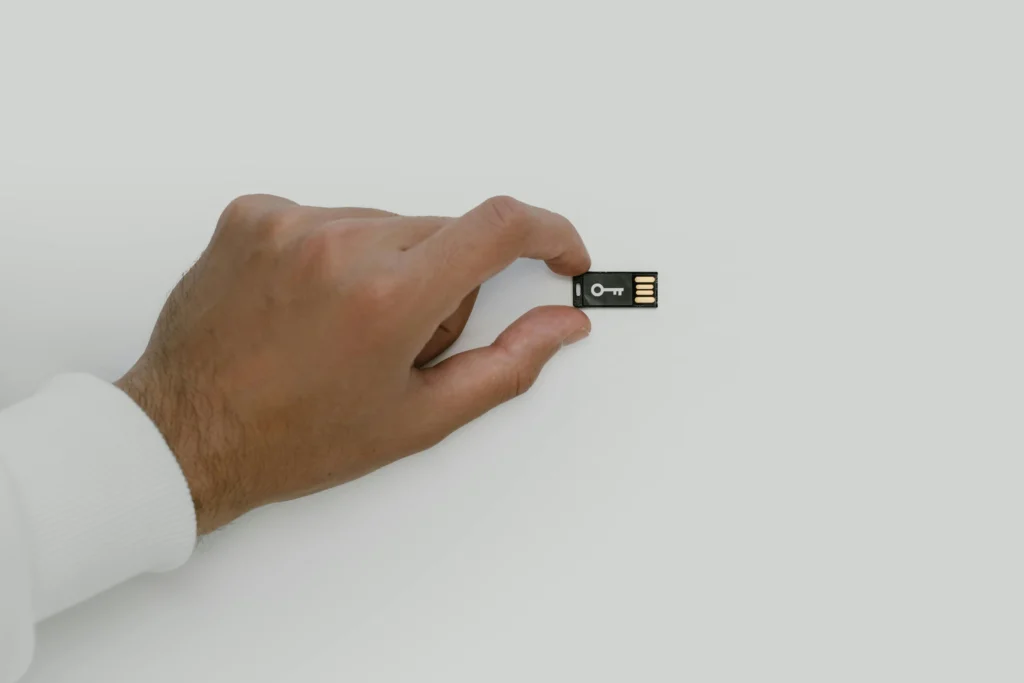
Most modern platforms offer cloud-based synchronization, such as Google Password Manager or iCloud Keychain, keeping your keys available across all your devices.
Read more: How to Create Secure and Easy-to-Remember Passwords
If you switch smartphones, your passkeys are automatically restored as soon as you log into your main ecosystem account, ensuring continuity.
For third-party devices or public computers, authentication can be performed using a QR code displayed on the screen of the unknown terminal.
You scan the code with your personal smartphone, validate the biometrics on the phone, and access is granted on the remote computer via Bluetooth Low Energy.
What are the challenges of transitioning to a completely passwordless world?
Despite the obvious benefits, full migration faces the challenge of compatibility with legacy systems that still rely on text-based authentication protocols.
Developers of legacy applications need to update their infrastructure to support WebAuthn APIs, a process that requires technical investment and large-scale implementation time.
There is also concern about what happens if the user loses access to their main cloud account or all of their physical devices simultaneously.
Know more: Benefits of putting a password on your phone apps — even with a screen lock
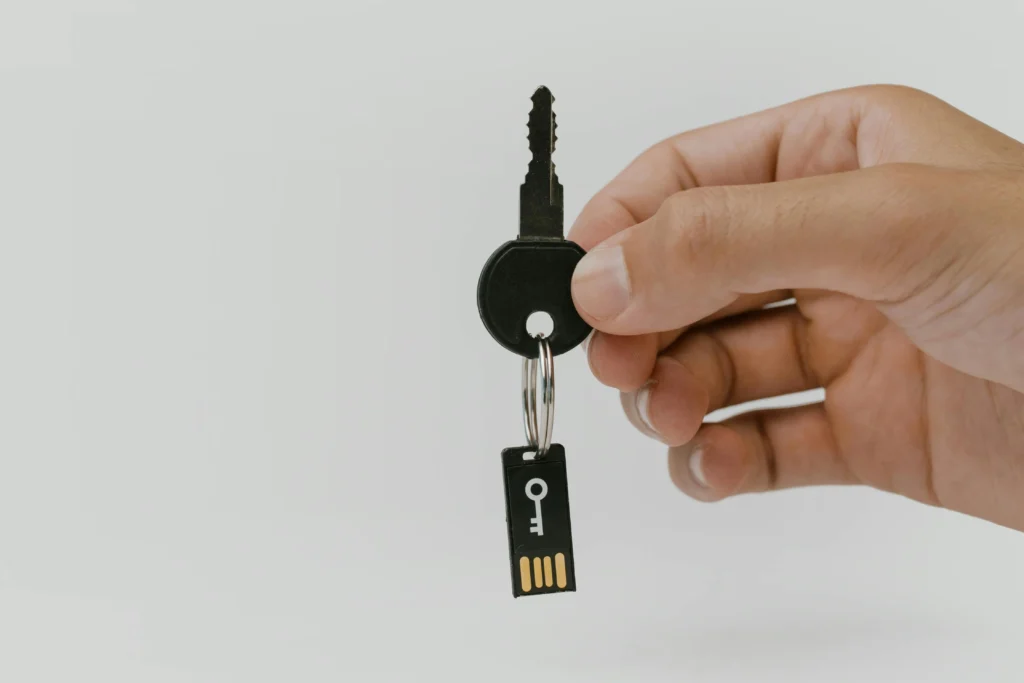
To mitigate this risk, platforms recommend using physical security keys (such as those from Yubico) or recovery methods based on trusted contacts.
User education is another fundamental pillar for the Digital passkey technology be adopted on a large scale without generating confusion or initial resistance from consumers.
Explaining that "not having a password" doesn't mean "less security" is the psychological barrier that tech marketing campaigns are focused on breaking down this year.
When will passkeys become the only standard for internet access?
The expectation for the end of 2026 is that most major financial services, social networks, and e-commerce platforms in Brazil will already offer passkeys as a primary payment option.
The transition will not be abrupt, but gradual, with traditional passwords being maintained only as an optional and increasingly less recommended reservation method.
The industry is moving towards a scenario where "passwords" will be seen as an obsolete and dangerous technology, similar to what happened with the unencrypted HTTP protocol.
Read more: How to find out if your password has been leaked online
Companies that are slow to adopt the Digital passkey technology They may face higher abandonment rates, as users prefer the fluidity of biometrics to the friction of typing.
The Brazilian government has also integrated these standards into public service portals to reduce fraud and facilitate citizen access to digital documents.
The portal Gov.br This has been an example of how strong authentication can be democratized, ensuring that millions of Brazilians access benefits with maximum security and minimum effort.
FAQ: Frequently Asked Questions about Passkeys
Can companies steal my fingerprint or face using passkeys?
No. Your biometric data never leaves your personal device and is not sent to the website's server or to the company that provides the passkey. The sensor only confirms to the operating system that the user is legitimate, thus allowing the use of the private cryptographic key stored locally.
What happens if I lose the phone that contains my passkeys?
If your keys are synced with your Google or Apple account, they will be available as soon as you set up a new device with your account. Additionally, it's recommended to have recovery methods set up, such as a backup code or a secondary physical security key kept in a safe place.
Can I use passkeys on Windows, Android, and iPhone at the same time?
Yes, the technology was designed to be cross-platform through the FIDO standard. You can use your iPhone to log in to a Windows computer or an Android device to access services on an iPad, using Bluetooth communication and QR Code to validate proximity.
The planned obsolescence of traditional passwords is a victory for usability and a severe blow to the global cybercrime economy.
By adopting the Digital passkey technology, By using this technology, you're not just simplifying your digital life, but also protecting your assets and personal data with the most modern tools available.
The future of the internet is password-free, smarter, and above all, focused on real human identity validated by hardware.
Start replacing your old passwords with digital keys today on services that already offer support and feel the difference in your security routine.
The peace of mind that comes from knowing your account is immune to common data breaches is the greatest benefit of this silent yet powerful innovation, which is here to stay permanently.