Virtual Assistants: Real Benefits for Home and Work
Adverts
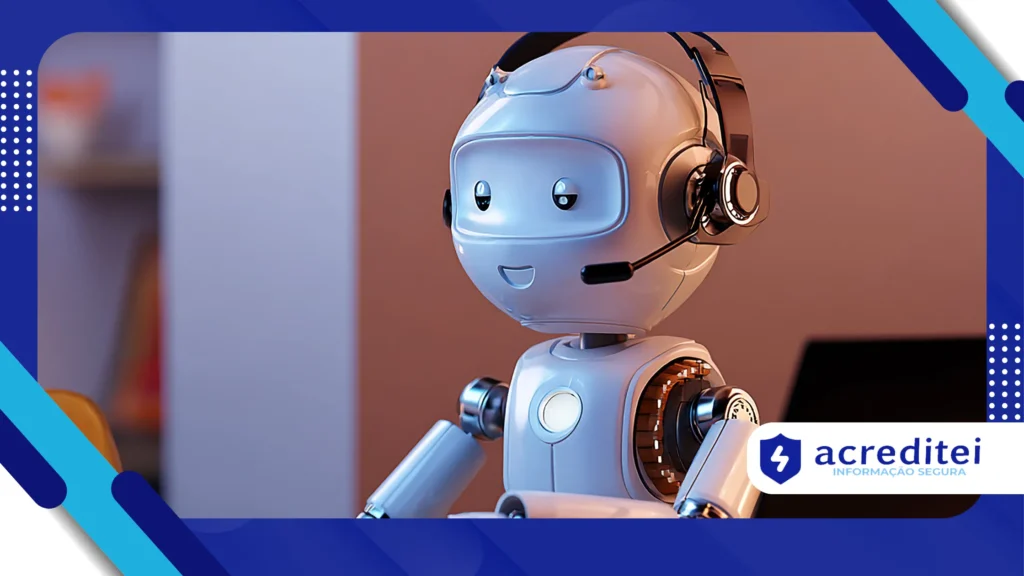
You virtual assistants are no longer just a futuristic resource, but concrete tools that transform the way we organize our lives at home and at work.
Today, they play a central role in the daily lives of millions of people, offering convenience, time savings, and increased productivity.
In this article, you will understand:
- How virtual assistants streamline everyday tasks.
- The main gains in the domestic and corporate environment.
- Current statistics that prove its real impact.
- Practical examples that illustrate its usefulness.
- Answers to frequently asked questions on the topic.
The silent revolution in everyday life
When observing the fast pace in which we live, we realize that virtual assistants became indispensable allies.
Adverts
They respond to voice commands, manage reminders, control smart devices, and even assist with professional decisions.
Integration with different digital platforms has expanded their possibilities, making them almost invisible, but highly present in every moment.
This silent revolution is reminiscent of a conductor conducting an orchestra: he is often unseen, but his influence dictates the rhythm and ensures harmony.
The difference is that, in the case of virtual assistants, the orchestra is made up of personal and professional tasks that gain fluidity.
It is worth remembering that the impact is not only technological, but also psychological.
Many users report feeling more organized and less anxious when delegating small tasks to these systems. As a result, their routine becomes lighter, and feelings of overwhelm diminish.
Plus, there's the convenience of natural interactions, increasingly closer to a real conversation.
By eliminating layers of complexity, the assistant adapts to the pace of modern life, functioning almost like a “digital arm” that operates behind the scenes.
+ Why Your Phone Keeps Recording What You Say — Even With the Screen Off
Clear benefits for the home

Within the home, the presence of these technologies is already noticeable in simple activities and also in complex situations.
One of the biggest highlights is home automation. With just a few commands, you can control lighting, adjust the temperature, and even activate security systems.
Another benefit is support for family routines. Parents can set reminders for school schedules or shopping lists that update automatically.
According to research by Statista published in 2024, more than 571,000 households in the United States use some type of device controlled by a virtual assistant, a fact that reinforces its growing penetration in the domestic environment.
More than just convenience, this integration creates smart homes that reduce waste and increase safety.
Imagine automatically controlling lights that turn off when no one is in the room, or sensors connected to the assistant that alert you to open doors.
The impact goes beyond comfort: there are energy savings and peace of mind for the whole family.
Another important point is accessibility. Elderly people or those with physical limitations find virtual assistants a way to increase their autonomy.
Asking your device to make a call or read messages aloud can be transformative, facilitating interactions that previously would have required more effort or dependency on others.
Productivity at scale at work
If the gains at home are already notable, in the corporate environment the results can be even more expressive.
Companies adopt the virtual assistants to manage schedules, organize meetings and even respond to initial client requests.
The big difference lies in the time savings. Professionals spend fewer hours on repetitive tasks and can focus on strategic activities.
According to a PwC report published in 2023, companies that adopted AI-based solutions for administrative tasks reduced the time spent on manual processes by up to 40%.
The implementation also improves communication between teams. Assistants integrated into management systems speed up the flow of information and reduce errors.
A project update request, for example, can be automatically turned into a reminder or meeting, without requiring manual intervention.
Another aspect is scalability. Small businesses without large teams can use assistants as operational support, ensuring initial customer service even outside of business hours.
This increases the perception of professionalism and generates a competitive advantage.
+ Top 5 smart home gadgets you should know about
Economic and social impacts
The growth of virtual assistants also drives the global economy. Smart device manufacturers, software companies, and even local businesses find opportunities to expand in this ecosystem.
Furthermore, access to technology is not restricted to large corporations, allowing small entrepreneurs to also optimize their operations.
Table – Main uses of virtual assistants in 2024
| Area of use | Percentage of adherence |
|---|---|
| Home device control | 57% |
| Personal agenda organization | 43% |
| Support with work tasks | 38% |
| Customer service | 29% |
| Health and well-being | 25% |
Source: Statista, 2024.
In the social aspect, the spread of technology creates new opportunities for inclusion.
For communities with limited access to educational resources, assistants can serve as channels of information and support for language learning or study management.
Furthermore, there are repercussions in the job market. Professionals specializing in digital security, software development, and systems integration are in growing demand, boosting sectors linked to technological innovation.
See too: Rumor about Orkut's return: what's true and how did this social network impact so many people?
Challenges and ethical considerations
While the benefits are clear, it's also important to consider the challenges. Data privacy remains one of the most discussed topics.
Organizations need to adopt security protocols, while users must be aware of their devices' privacy settings.
Furthermore, there is a need to balance convenience with responsibility. While virtual assistants optimize processes, it is essential that there is transparency regarding the use of the information collected.
In this sense, portals such as Wired bring relevant analyses on ethics and technology, deepening the debate.
Another point that requires attention is excessive dependency. The more people delegate tasks, the greater the risk of losing simple skills, such as manually organizing schedules or memorizing tasks.
It is necessary to cultivate conscious use, transforming the assistant into a partner and not a substitute for personal autonomy.
From a corporate perspective, social responsibility also comes into play. Companies need to ensure that the use of these technologies doesn't exclude audiences less familiar with digital resources.
A healthy balance between innovation and accessibility will be crucial for the future.
+ iOS 26: Six features to use in Apple's new system for iPhone, iPad and Mac
The future of human-machine interaction
Advances in artificial intelligence promise to make assistants even more personalized.
Soon, they will not only respond to commands, but also anticipate needs based on behavior patterns.
The trend is for them to act as true digital partners, capable of learning from the routine and offering tailored solutions.
An interesting analogy is to think of them as road navigators: while in the past drivers had to memorize maps or ask for directions, today GPS anticipates routes, suggests alternatives, and warns of risks.
Assistants are moving towards fulfilling this role in all aspects of modern life.
Greater integration with sensitive areas, such as healthcare, is also expected. Appointment scheduling, medication reminders, and vital sign monitoring are already being tested on connected devices.
This convergence between technology and well-being promises to transform people's relationship with preventive care.
In the corporate environment, evolution points to assistants capable of generating reports, interpreting complex data, and even supporting strategic decision-making.
This doesn't eliminate the human figure, but it creates a new layer of support, allowing for faster, more assertive decisions.
Conclusion
You virtual assistants They are no longer a technological promise and have become real allies for those seeking practicality, efficiency and greater control over their routine.
Whether at home or at work, they already offer tangible and measurable benefits.
The integration of smart devices, productivity in the corporate environment, and social impact demonstrate that we are facing a resource that will continue to shape the future.
It is up to the user to consciously explore the possibilities, ensuring that innovation serves to improve quality of life and generate opportunities.
If you want to follow in-depth analyses of digital trends and their effects on everyday life, the portal TechCrunch is an excellent reference.
Frequently asked questions
1. Do virtual assistants only work with voice commands?
No. While voice commands are the most common, many devices also allow interactions via apps or text interfaces.
2. Are there privacy risks when using virtual assistants?
Yes. Because they collect data, it's essential to properly configure permissions and follow the manufacturers' privacy policies.
3. Do virtual assistants completely replace human labor?
No. They reduce repetitive tasks, but they don't replace critical thinking, creativity, and human empathy, which remain irreplaceable.
4. Is it worth investing in a virtual assistant for your home?
It depends on your routine. If you're looking for convenience, automation, and device integration, the investment can yield significant returns.