Apps to quickly identify songs playing around you.
Adverts
Apps for identifying songs They represent one of the greatest conveniences of modern digital life, eliminating that old frustration of trying to guess which melody is playing in a public setting.
Whether it's in a television commercial, on the car radio, or in the background of a short video on social media, current technology solves the mystery in seconds.
This efficiency is due to advances in cloud servers and mobile processors, which analyze the spectrogram of captured sound almost instantaneously.
Understanding the ecosystem of these tools helps you choose the best option to expand your playlists without interruptions or difficulties.
Adverts
How does acoustic fingerprint technology work in today's smartphones?
The secret behind instant recognition lies in a complex mathematical process called acoustic fingerprint generation.
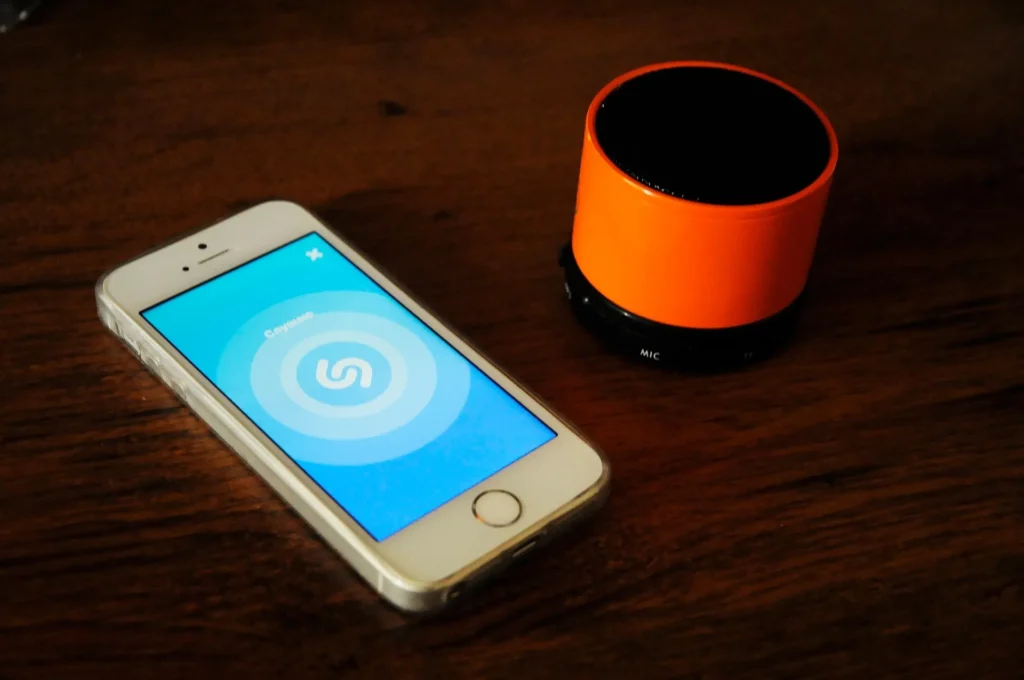
When you activate the device's microphone, the system ignores background noises such as conversations or engines to focus strictly on the frequencies and intensity peaks of the melody.
This isolated sample becomes a unique numerical code sent to the central servers of the search platform.
There, the algorithm cross-references this digital signature with billions of tracks registered in the database, returning the title of the work, the album, and the artist's name in record time.
The best apps to identify songs They use artificial intelligence to reconstruct sections muffled by wind or low-fidelity speakers.
This ensures that, even inside a noisy store or at open parties, the accuracy rate remains exceptionally high for users.
What are the best native and dedicated tools available on the market?
The current market is divided between native tools built directly into operating systems and independent applications focused on complete audiophile experiences.
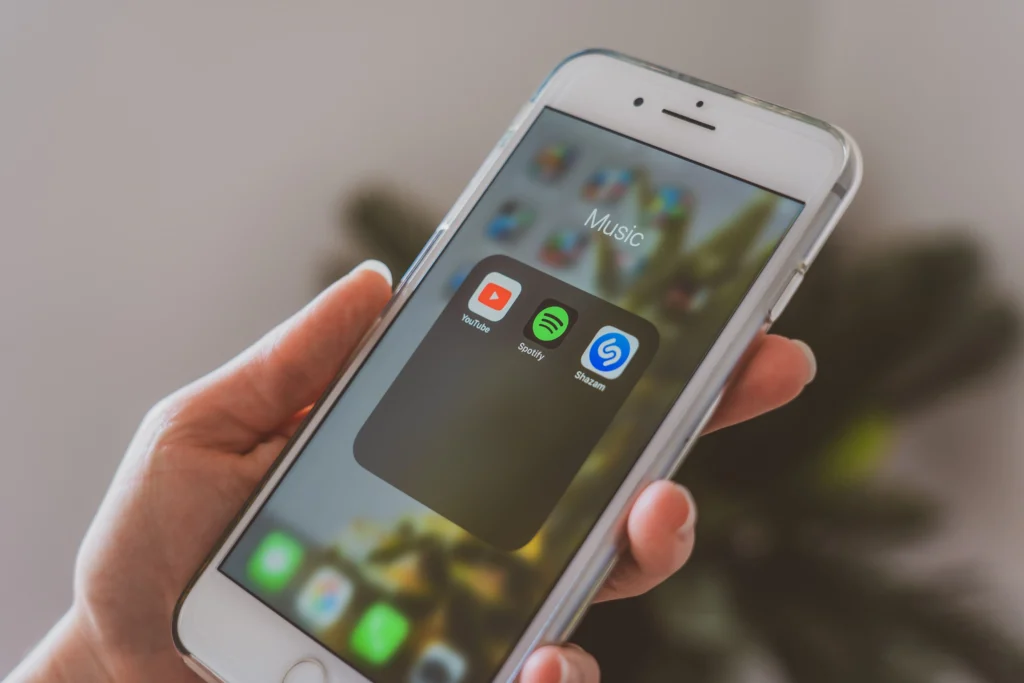
iOS users can count on Shazam recognition integrated directly into the Control Center, streamlining the process without requiring additional downloads from the App Store.
For Android users, Google's virtual assistant offers a powerful feature capable of identifying songs simply by listening to the user hum the rhythm.
This feature expands the scope of use, helping to rediscover that old melody that's etched in your memory but has disappeared from commercial radio.
To keep up with key digital security guidelines, understand consumer privacy rights in the mobile environment, and analyze the telecommunications landscape, the portal of National Telecommunications Agency (Anatel) It provides constant institutional updates.
| Application / Tool | Average Response Time | Accepted Input Method | Integrated Differential in 2026 |
| Shazam (Apple) | 2 to 4 seconds | Direct ambient audio | Direct syncing with Apple Music and cloud history |
| Google Assistant | 4 to 7 seconds | Audio, humming or whistling | Free, native, and integrated with the global search engine. |
| SoundHound | 3 to 5 seconds | Audio, singing, and voice command. | Integrated real-time karaoke-style lyrics display |
| Musixmatch | 5 to 8 seconds | Direct ambient audio | Focus on lyrics translation and cross-platform synchronization. |
Why has integration with streaming services transformed these utility tools?
In the past, discovering the name of a composition was only the first step in a journey that required searching for the file to purchase or download later.
Today, the apps to identify songs They function as direct bridges to ecosystems like Spotify, Deezer, and YouTube Music, creating automatic playlists with tracks discovered on the street.
This logistical fusion saves time and enriches the cultural experience, allowing you to add your recent find to your personal library with just one tap.
Your search history is saved to your account, serving as a geolocated musical diary of your travels and nights out.
Furthermore, these platforms have begun to function as recommendation networks, suggesting new artists based on the style of tags you typically scan.
This dynamic transforms a simple utility tool into an engine for the continuous discovery of specialized content.
How do algorithms manage to overcome noisy environments to find the correct audio?
Filtering out the chaotic noise of a busy avenue or a crowded restaurant requires significant software engineering focused on echo cancellation and wave isolation.
Modern applications break the captured audio file into multiple small pieces, analyzing only the frequencies that carry the main melodic hooks.
Read more: Find downloaded files on Android faster.
If a specific frequency is distorted by a nearby human voice, the system compensates for the flaw by analyzing the rhythmic tempo and secondary instruments.
This technical redundancy ensures the robustness of the service, allowing it to function even under acoustic conditions that were considered unfavorable in the past.
Guarantee access to apps to identify songs In any situation, it is essential to keep the cell phone microphone clean and free of protective cases that obstruct the physical capture of sound.
Small adjustments to your device's hardware optimize the algorithm's chances of success on the very first environmental scan attempt.
When should you use identification history to map your consumption trends?
Analyzing the records of your past searches offers valuable insight into how your artistic tastes evolve over the months and seasons.
Know more: How digital culture has changed the habits of modern society.
Often, we discover entirely new genres through movie soundtracks or environments we frequent without prior planning.
To monitor global trends in the recording industry, access research on media consumption habits, and view relevant reports from the global entertainment industry, visit the portal of International Federation of the Phonographic Industry (IFPI.org) It provides valuable official data and statistics.
The future of acoustic recognition in the palm of your hand.
The evolution of audio tracking systems proves that mobile technology has reached a level of maturity where the barrier between the physical and digital worlds has disappeared.
Having a tool capable of decoding the surrounding environment provides unprecedented control over daily entertainment consumption.
Read more: Interesting facts about algorithms that create art and music with AI.
Explore your smartphone's settings, activate voice shortcuts, and choose the platform that best complements your favorite streaming service.
By mastering these practical resources, you ensure that no memorable melody will ever again be lost to oblivion for lack of a name.
Frequently Asked Questions about Music Apps
Do music identification apps use up a lot of mobile data?
No, the captured audio file is converted into an extremely lightweight digital signature, consuming only a few kilobytes of your internet data allowance per search.
Is it possible to discover a song even without an internet connection?
Some apps allow you to record audio samples offline, saving the digital fingerprint on the device to search the database as soon as the connection returns.
Do apps record private conversations while searching for a melody?
Market-leading platforms claim that audio capture is temporary and processed in real time, discarding the recording immediately after generating the digital signature of the sound.
Can the system identify tracks performed at live shows or cover versions?
Accuracy decreases in these scenarios because the arrangements, tempo, and acoustics of the live show differ from the original studio recording previously stored on central servers.