10 cybersecurity practices for small businesses to avoid attacks

Adverts
Corporate survival in 2025 depends not only on sales or marketing, but fundamentally on the ability to protect digital assets against increasingly sophisticated and relentless threats.
Many managers still operate under the dangerous illusion that their businesses are invisible to hackers, believing that only large conglomerates suffer from espionage or data theft.
The reality, however, is brutal: automated attacks scan the network 24 hours a day in search of any open port, without discriminating based on the size or sector of the victim.
Implement a solid strategy of Cybersecurity for small businesses It has ceased to be a technical differentiator and has become a governance and business continuity obligation.
Adverts
In this article, we'll get straight to the point with 10 vital practices you need to adopt today to safeguard your operations, protect your customers, and avoid devastating financial losses.
Summary:
- How can we educate employees against social engineering?
- Why is multifactor authentication non-negotiable today?
- Why is it important to keep software always up to date?
- How can I ensure data recovery with secure backups?
- What changes with the adoption of the Zero Trust concept?
- What tools can replace traditional antivirus software?
- How to secure remote connections and Wi-Fi networks?
- Why abandon the use of repeated or weak passwords?
- How to monitor third-party access to systems?
- What to do in the first few minutes of a real attack?
- Conclusion
- Frequently Asked Questions (FAQ)
How can we educate employees against social engineering?
The first and most critical security practice doesn't involve expensive hardware, but rather strengthening the "human firewall" that operates your systems daily.
Criminals are using artificial intelligence to create convincing phishing emails, mimicking the language of bosses or suppliers to induce incorrect clicks or unauthorized financial transfers.
Investing in ongoing awareness training is the only way to prepare your team to identify these subtle signs of fraud before the damage occurs.
Conduct simulated attacks periodically, sending out fake, seemingly safe emails to test employee alertness and offer immediate guidance to those who fail the test.
A culture where doubt is encouraged protects the Cybersecurity for small businesses Much better than any other software, because it attacks the root of the vulnerability: human error.
Why is multifactor authentication non-negotiable today?
Relying solely on passwords, no matter how complex they are, is an obsolete practice in the face of modern tools for cracking credentials and massive data leaks.
Multifactor Authentication (MFA) creates a robust barrier, requiring a second proof of identity, such as a code on the mobile phone or biometrics, in addition to the traditional password.
This extra layer prevents intruders from accessing corporate accounts, emails, or financial systems, even if they have stolen the master password from an unsuspecting user.
Enable MFA on absolutely all services that offer this option, prioritizing access to corporate email and cloud storage platforms.
Implementation is generally free or very low cost, offering an immeasurable return on investment by blocking nearly 99% of credential-based attacks.
+ How to identify suspicious links before clicking
Why is it important to keep software always up to date?
Outdated software acts like broken windows in a building; it signals negligence and offers an easy entry point for opportunists who are aware of the structural flaws.
Manufacturers release security patches to close newly discovered vulnerabilities that hackers actively exploit to install malware or steal information.
Establish a rigorous patch management routine, configuring operating systems and critical applications to update automatically whenever a new version is released.
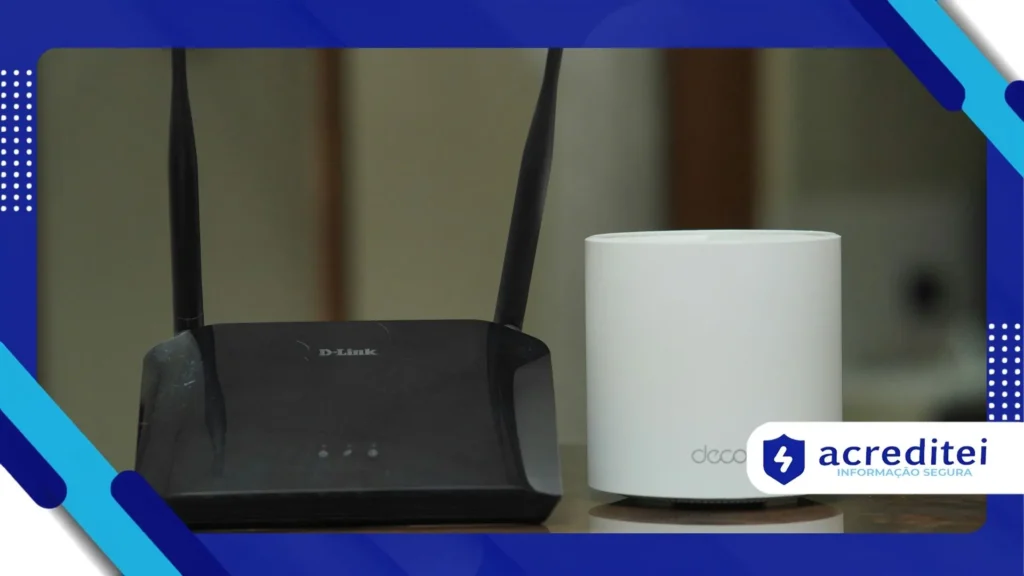
Do not ignore firmware updates for peripheral devices, such as routers and network printers, which are often overlooked and become dangerous blind spots.
Keeping the digital environment up-to-date is a fundamental pillar of Cybersecurity for small businessesClosing loopholes before they can be used against you.
To understand which vulnerabilities are being exploited most frequently right now, consult the alerts from... CISA (Cybersecurity & Infrastructure Security Agency), a global authority source.
How can I ensure data recovery with secure backups?
When all defenses fail, backup is your last line of life, allowing the business to continue operating even after a catastrophic disaster.
The recommended practice is the 3-2-1 rule: keep three copies of the data, on two different types of media, with one copy stored in a separate physical location (off-site).
Backups need to be immutable or isolated from the main network to prevent a ransomware attack from encrypting your backups as well, rendering recovery impossible.
Test the restoration of these files regularly; a backup that has never been tested is just a hope, not a reliable or professional security strategy.
The ability to quickly restore operations differentiates resilient companies from those that shut down after losing their customer and financial databases.
+ How to Create Secure and Easy-to-Remember Passwords
What changes with the adoption of the Zero Trust concept?
The traditional security model, which blindly trusted any device within the office, is dead; the new standard for 2025 is Zero Trust.
This practice assumes that no connection is secure by default, requiring constant verification of identity and device integrity for each request to access resources.
Segmenting the network ensures that if one computer is compromised, the attacker will not have free rein to browse all of the company's servers indiscriminately.
Apply the principle of least privilege, granting employees access only to the data strictly necessary for their roles, drastically reducing the attack surface.
Adopting Zero Trust modernizes the Cybersecurity for small businesses, aligning its defense with global best practices against internal and external threats.
What tools can replace traditional antivirus software?
Older antivirus software, based solely on signatures of known viruses, can no longer stop modern threats that change shape or do not use files.
The current solution is EDR (Endpoint Detection and Response), a technology that monitors device behavior in real time to identify suspicious activity.
EDR tools can detect and block ongoing attacks, such as the execution of malicious scripts, even if the malware is new to the market.
These solutions allow you to isolate an infected computer from the network with a single click, preventing the infection from spreading to other departments within the company.
Investing in advanced endpoint protection is essential, as laptops and desktops are prime targets for complex intrusions.
How to secure remote connections and Wi-Fi networks?
Hybrid work has expanded the company's perimeter, making the security of remote connections and wireless networks an absolute priority for IT management.
Configure your corporate Wi-Fi network with WPA3 encryption and create a completely isolated "Guest" network for visitors, preventing access to your internal servers.
For remote employees, require the use of corporate VPNs (Virtual Private Networks), which create a secure encrypted tunnel between the employee's home and the company.
Never expose Remote Desktop Connections (RDP) directly to the internet without protection, as they are the number one vector for ransomware attacks.
Protecting data traffic ensures that sensitive information is not intercepted in transit, strengthening the infrastructure. Cybersecurity for small businesses.
Why abandon the use of repeated or weak passwords?
The human habit of reusing the same password across multiple websites is a gift to hackers, allowing a breach on a seemingly trivial site to compromise banking systems.
Adopt corporate password managers, tools that generate and store complex and unique credentials for each service used by your team.
This eliminates the need to memorize dozens of codes, encouraging the use of long, encrypted passwords that are mathematically impossible to guess.
Configure policies that prevent the use of obvious passwords or passwords that have already appeared in publicly known previous data breaches.
Password managers immediately raise the level of security, eliminating sticky notes on monitors and insecure Excel spreadsheets containing company logins.
Table: Impact of Security Practices
| Safety Practice | Implementation Cost | Impact on Risk Reduction | Implementation Time |
|---|---|---|---|
| Team Training | Low / Medium | Very High (Human Factor) | Continuous |
| MFA (Multifactor) | Low / Zero | Immediate and Critical | Fast (< 1 day) |
| EDR (Endpoint) | Average | High (Active Detection) | Medium (Installation) |
| Patch Management | Bottom (Tools) | High (Vulnerabilities) | Appellant |
How to monitor third-party access to systems?
Your company may be secure, but if you hand over the key to the door to a negligent supplier, all your defenses will be irrelevant.
Implement rigorous third-party risk management by assessing the security posture of partners who need access to your data or network infrastructure.
Grant temporary and restricted access only as necessary to perform the contracted service, revoking credentials immediately upon completion of the work.
Monitor the activity logs of these external users to ensure they are not accessing sensitive areas or making unauthorized data copies.
The digital supply chain is an increasingly vulnerable attack vector, and controlling who enters your digital home is vital to... Cybersecurity for small businesses.
+ How to find out if an app is collecting improper data.
What to do in the first few minutes of a real attack?
Improvisation is the enemy of recovery; knowing exactly how to react during a cyber incident determines the extent of the damage your company will suffer.
Create a clear and accessible Incident Response Plan, listing who should be contacted, which systems should be shut down, and how to report the problem.
This document should include emergency contact information for technical support, legal counsel, and insurance companies, saving valuable time during the initial chaos.
Conduct tabletop drills simulating a ransomware attack or data breach to train the muscle memory of the management and technical team.
Preparation transforms panic into process, enabling a rapid response that mitigates damage and demonstrates professionalism to clients and authorities.
Conclusion
Complacency is the greatest risk an entrepreneur can take in today's digital landscape, where the threat is constant, invisible, and highly lucrative for criminals.
Adopting these 10 practices of Cybersecurity for small businesses It doesn't guarantee total immunity, but it raises your defense to a level that discourages most attackers.
Security should be viewed as a dynamic process of continuous improvement, requiring attention, smart investment, and a cultural shift throughout the organization.
Start implementing these changes today; the cost of prevention is always infinitely lower than the price of recovering from a disaster.
To deepen your knowledge of protection frameworks, I recommend reading... NIST Guide for Small Businesses, which offers valuable and detailed resources.
Frequently Asked Questions (FAQ)
Why is cloud backup more secure than external hard drive backup?
Cloud backup typically offers automation, encryption, and geographic redundancy, protecting data against fires, physical theft, or hardware failures that would affect a local hard drive.
What is the ideal frequency for safety training?
Ideally, monthly knowledge capsules should be provided, followed by more in-depth training sessions quarterly, keeping the topic fresh in the minds of employees.
What is social engineering?
It is the art of psychologically manipulating people into divulging confidential information or performing actions that compromise security, exploiting human trust and curiosity.
Do I need a firewall if I already use the cloud?
Yes. The firewall protects the edge of your local network and the traffic entering and leaving office devices, acting as a complementary layer of security to that offered by cloud providers.