
Why are electric cars still stuck with range anxiety?
Adverts
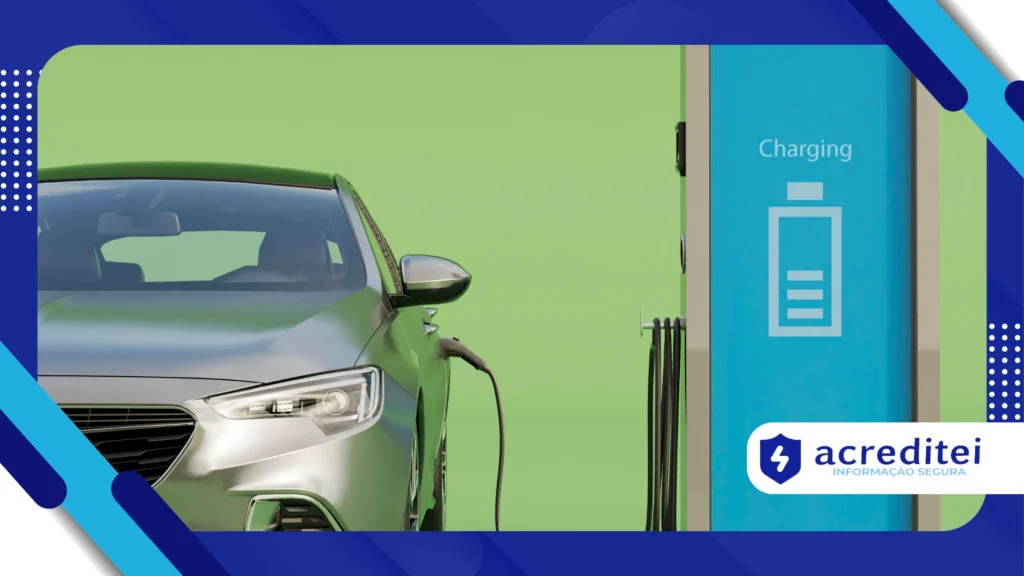
In this article, we explore the key factors that make electric cars still get stuck with range anxiety, even with the evolution of automotive technologies.
You'll understand the concept of range anxiety, how it impacts drivers' decisions, the bottlenecks in Brazilian infrastructure, the difference between expectations and reality regarding batteries, and which public and private initiatives are helping to transform this scenario.
So, be sure to read it all the way through so you don’t miss any details!
Autonomy anxiety: real fear or modern myth?
The idea that the Electric cars are still stuck due to range anxiety is a reality for many drivers.
Adverts
Even though more modern electric models offer good range, the perception that the charge may run out before reaching a desired destination creates an invisible but powerful barrier.
This insecurity, especially on longer trips, remains one of the reasons consumers resist adopting electric vehicles.
In part, this perception is supported by bad experiences with chargers that are out of operation or by the lack of nearby points in remote regions.
In a country like Brazil where highways are the driving force behind mobility, this anxiety is growing. And it's not just about technology: it's about psychology.
When the driver feels like he or she can get stuck on the road, the appeal of electrification is lost.
Read too: Hidden WhatsApp Tricks That Few People Know About
Expectation vs. Reality: What the Numbers Don't Tell You
Most automakers advertise ideal ranges, achieved in controlled environments.
But in the real world, air conditioning use, average speed, and topography drastically alter these numbers. A car that promises 400 km (250 miles) may, in practice, deliver 300 km (180 miles) or even less.
This directly affects consumer behavior. They feel betrayed when they realize they need to recharge their vehicle earlier than expected.
And this cycle further fuels the fear of adopting technology, reinforcing the feeling that Electric cars are still stuck due to range anxiety.
Many people share similar experiences. A driver from Campinas, for example, reported that, despite the dashboard indicating 280 km of range, he decided not to take a 200 km trip for fear of not finding reliable charging points along the way.
This is the kind of fear that no amount of propaganda can erase.
+ The Truth About Free Antivirus: What Do They Really Do?
Charging infrastructure: the Achilles heel of electrification
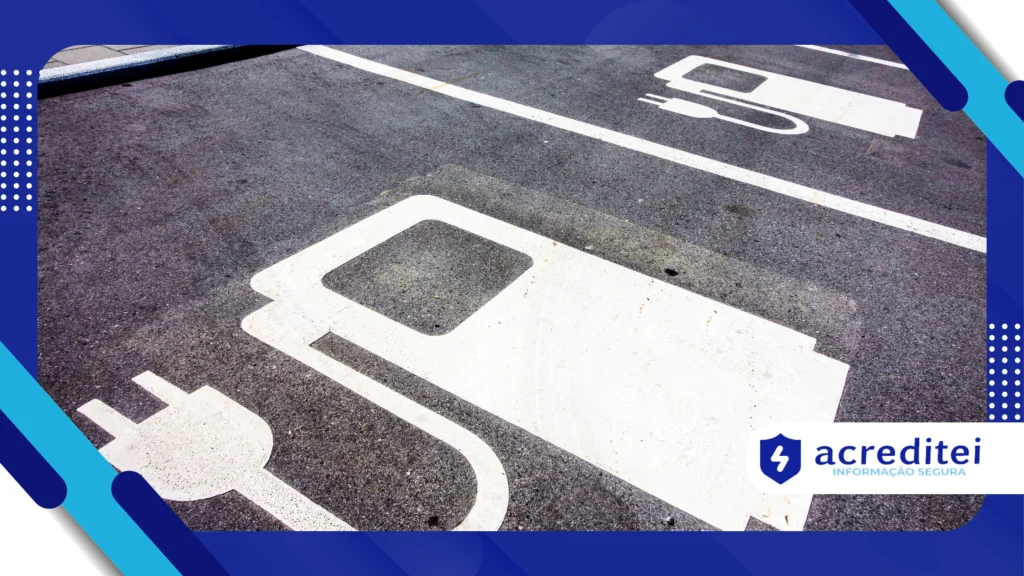
Public charging infrastructure is one of the biggest contributors to perpetuating range anxiety.
As of April 2025, Brazil had approximately 4,100 public charging stations, according to ABVE (Brazilian Electric Vehicle Association). For a country of continental proportions, this number is insufficient.
Furthermore, uneven distribution is a notable problem. More than 70% of the points are concentrated in the Southeast, while regions like the North and Central-West remain virtually undiscovered.
The lack of standardization and maintenance of these points also generates distrust.
Another important issue is charging time. Most public chargers available in Brazil are still AC (alternating current), which takes between 6 and 9 hours to fully charge.
DC fast chargers, which are more efficient, are still rare and often inaccessible.
+ What is Fiber Optics and Why is it Better?
Comparison table: actual vs. promised range (2025 models)
| Model | Promised Autonomy | Average Real Autonomy | Cooldown Time (CC) |
|---|---|---|---|
| Renault Kwid E-Tech | 298 km | 210 km | 9am |
| JAC E-JS1 | 302 km | 220 km | 7:30 am |
| Volvo XC40 Recharge | 418 km | 350 km | 8am |
| BYD Dolphin | 291 km | 240 km | 6h |
| BMW iX1 | 440 km | 370 km | 7am |
Source: Inmetro and manufacturers' data (2024–2025)
User Experience: Trust Built in Practice
More than numbers, what drives the purchasing decision is the actual experience. And when that experience is frustrating, the impact is lasting.
An electric car owner in Curitiba reported that, after finding two inoperative charging stations during a trip, he began avoiding trips outside his neighborhood.
This type of psychological limitation restricts the full use of the vehicle and reinforces the argument that Electric cars are still stuck due to range anxiety.
And, let's face it, no one buys a car to drive around in fear, right?
Another issue is the difficulty of mapping. While there are apps that show the location of chargers, many of them don't update in real time, reducing reliability and usefulness.
Technological advances still far from most
Companies like Tesla already have batteries that offer up to 600 km of range and recharge in less than 20 minutes. However, these models are beyond the reach of most Brazilians.
The popularization of these technologies still depends on larger scales of production and tax incentives.
Meanwhile, the average consumer must adapt to a technology that seems promising, but which, in everyday use, still requires patience, planning, and luck.
And when the promise doesn't match the practice, frustration is inevitable.
Furthermore, the cost of models with greater autonomy is often prohibitive.
A BloombergNEF study showed that, in 2024, vehicles with battery ranges above 400 km cost, on average, 30% more than models with less than 300 km of autonomy.
Public policies still moving slowly
Although the federal government has launched initiatives such as Rota 2030 and discussed incentives for electric vehicles, the results are still limited.
There is a lack of agility in implementation and, above all, integration between the state and municipal spheres.
States like São Paulo have moved forward with IPVA exemptions and the introduction of a rotation system. Others, like Goiás and Amazonas, have yet to define policies.
This contributes to an unequal scenario, which directly impacts the spread of technology.
The lack of tax incentives for installing charging points in public parking lots and commercial buildings also hinders progress.
To unlock this agenda, a national plan is needed, with clear goals and a defined budget.
Communication and education: the missing link
Few consumers know they can install chargers at home or that electric cars can regenerate energy when braking. This misinformation fuels unnecessary fears.
There is a lack of a strong educational campaign, as was the case with seat belts or airbags in the past.
Until this happens, ignorance continues to be one of the greatest enemies of electrification.
The report IEA “Electric Vehicle Outlook 2024” highlights that countries that invest in education and communication about electric vehicles tend to overcome the emotional barriers to adoption more quickly.
The future can (and needs to) be more electric
The way to overcome the range anxiety is not only about developing cars with greater autonomy, but about building a reliable infrastructure and educating the consumer.
When this happens, the question will no longer be why Electric cars are still stuck due to range anxiety, but rather why it took us so long to resolve this.
As automakers strive to democratize technologies, society needs to collaborate by creating an ecosystem prepared for this new paradigm.
And this includes everything from public policies to the simple confidence consumers have in leaving home with a battery they know will do the job.
Frequently Asked Questions
1. What is it? range anxiety?
It's the fear that an electric car will run out of charge before reaching its destination or a reliable charging point.
2. Are electric cars good for long trips?
They are still not ideal in Brazil, mainly due to the lack of fast charging points on highways.
3. What is the real range of the most affordable models?
On average, between 200 and 250 km, depending on the model and conditions of use.
4. Can I install a charger at home?
Yes, as long as it has a compatible electrical system. This greatly helps reduce range anxiety.
5. Does the government encourage the purchase of electric vehicles?
Still tentative. Some states offer benefits, but integrated policies at the national level are lacking.
6. Are there reliable apps for locating charging stations?
Yes, but many of them still don't have real-time updates, which affects user confidence.
For up-to-date and reliable information on infrastructure and public policies for electric mobility, see the EPE Electromobility Panel.