
Early commercial hard drives occupied entire rooms.
Adverts
You first commercial hard drives They emerged in the 1950s, requiring entire industrial halls to house gigantic structures that stored a negligible amount of data.
Analyzing this monumental engineering feat reveals how magnetic storage revolutionized data processing in businesses, replacing punch cards with instant and innovative random access.
Understanding the size, weight, and operation of these pioneering computer systems allows us to appreciate the technological evolution that culminated in modern digital storage devices.
What did the first commercial hard drives look like, and what size were they?
The IBM 305 RAMAC ushered in the era of commercial disk storage in 1956, featuring physical dimensions equivalent to two large refrigerators lined up.
Adverts
Its metal structure weighed over a ton and required heavy forklifts and adapted cargo planes to transport it to the headquarters of the contracting clients.
Fifty aluminum discs coated with magnetic paint rotated at 1,200 revolutions per minute, mounted vertically on a central axis connected to powerful electric motors.
| Technical Parameter | IBM 305 RAMAC (1956) | Typical Magnetic Unit | Historical Operational Impact |
| Total Capacity | 5 Megabytes (4.4 MB net) | 50 24-inch discs | It replaced thousands of punch cards. |
| Cabinet Weight | Approximately 1,000 kg | Steel and aluminum structure | It required reinforced industrial floors. |
| Access Time | 600 milliseconds | Single mobile robotic arm | It allowed random data querying. |
| Transfer Fee | 8.8 Kilobytes per second | Direct magnetic reading | It streamlined business accounting processing. |
The space occupied by these cabinets required rooms with industrial air conditioning to prevent overheating of the electronic components and processing valves of the time.
What made the IBM 305 RAMAC a milestone in the history of computing?
Prior to this historic launch, companies relied exclusively on magnetic tapes and punch cards, which required time-consuming sequential reading to locate any stored information.
Random access technology made it possible to consult any record stored on magnetic disks in less than a second, transforming the accounting management of large corporations.
Engineers at IBM's San Jose lab developed an articulated robotic arm that moved vertically and horizontally between aluminum blades to read the data.
The innovation eliminated the need to manually reorder stacks of cards, allowing for real-time updates of bank balances and industrial inventories with absolute precision and reliability.
To view the preserved historical records and original documents of this technological revolution, access the exhibition collection of... Computer History Museum, a global authority on computational preservation.
Why were the first commercial hard drives so heavy and expensive?
The manufacturing of first commercial hard drives It involved dense materials, high-powered motors, and bulky readout heads developed with highly resistant metal alloys.
The iron oxide coating on the discs was applied manually using techniques similar to those used in car painting, ensuring uniform and stable magnetic layers.
The monthly rental costs for the equipment exceeded thousands of dollars, initially restricting its use to government agencies, the armed forces, and large multinational corporations.
The need for shielded enclosures to contain the vibration from the fifty rotating blades increased the final weight, requiring structural modifications to the buildings where they were installed.
The high financial value reflected the pioneering nature of an engineering project that paved the way for banking automation, air traffic control, and global fleet management in the last century.
When did the reduction in the size of storage devices occur?
During the 1970s, the introduction of floating read/write heads and sealed enclosures allowed for closer proximity to disk drives, dramatically increasing data recording density.
The launch of Winchester technology by IBM in 1973 significantly reduced the dimensions of the components, bringing the systems closer to the size of workbenches and offices.
In the early 1980s, the emergence of the 5.25-inch format made it possible to integrate hard drives into desktop personal computers without requiring dedicated rooms.
The transition to smaller formats reduced production costs, decreased electricity consumption, and popularized magnetic storage in small businesses and homes.
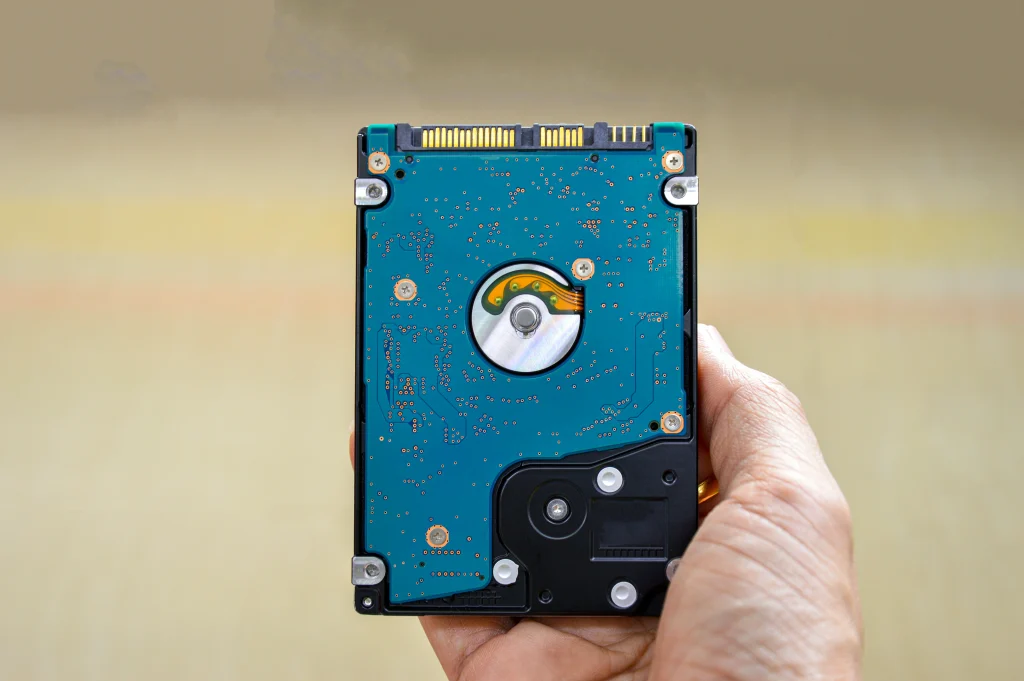
Continuous miniaturization allowed 3.5-inch and 2.5-inch disks to dominate the commercial and home computer market in the following decades of technological expansion.
What was the storage capacity of these pioneering machines?
The total capacity of the first commercial system was only five megabytes of alphanumeric characters, an insufficient amount to store a single modern high-resolution digital photograph.
Even with this limitation, the equipment was able to store the equivalent of 64,000 punch cards, freeing up entire warehouses that previously served only to archive accounting papers.
Read more: Apps to track government benefits without leaving home.
The efficiency in managing banking data and business records more than compensated for the physical limitations of operational capacity of that pioneering early technology.
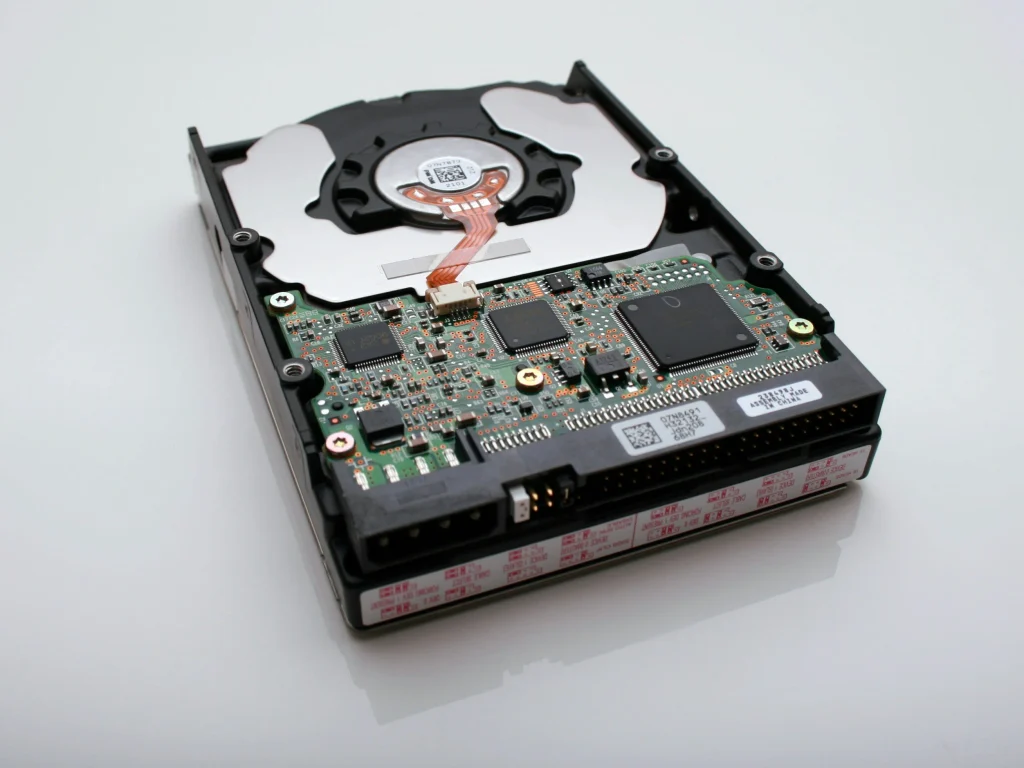
The continued evolution of read heads and magnetic materials has allowed recording density to be multiplied millions of times over the following decades.
Detailed records on the evolution of storage patents and official technical documents from the pioneering era are available in the institutional archive of IBM History Archives, the official reference for the technology industry.
How did the magnetic reading and writing mechanism work?
A single head, powered by pneumatic motors, navigated between the fifty discs to read and write information on the magnetized surfaces of the rotating aluminum blades.
The compressed air maintained a microscopic distance between the print head and the magnetic surface, preventing direct friction and premature wear of the recording discs.
The change in magnetic polarity in the iron oxide particles recorded the binary digits that represented numbers, letters, and operational commands of the corporate systems.
Know more: Developer verification on Android: what's changing?
This complex mechanical process required constant preventive maintenance to align the moving components and calibrate the magnetic flux sensors installed in the industrial cabinets.
The precision achieved by this mechanism paved the way for the emergence of faster, safer, and more efficient electronic controllers in subsequent generations of hard drives.
What were the infrastructure challenges in maintaining these systems?
Installing these cabinets required the renovation of industrial floors to support the concentrated load of more than one ton on a small area of the room.
Fluctuations in the power grid could cause motor rotation failures, requiring the installation of large generators and stabilizers to protect the circuits.
The relative humidity of the air needed to be strictly controlled to prevent oxidation of the aluminum sheets and the buildup of static electricity in the electronic components.
Read more: Data security on Google Play: how to rate an app
Specialized technicians remained on call to perform periodic lubrication, replace burnt valves, and align the motors that kept the discs rotating constantly.
Overcoming these physical barriers allowed the establishment of the first industrial standards for security and infrastructure for modern data processing centers.
Frequently Asked Questions (FAQ)
How much did it cost to rent the first commercial hard drive in the 1950s?
The monthly rental of an IBM 305 RAMAC cost around $3,200 at the time, an amount equivalent to tens of thousands of dollars today when adjusted for inflation.
How was the first commercial hard drive transported to customers?
Due to its gigantic size and weight exceeding one ton, the equipment needed to be transported by cargo planes and unloaded with industrial forklifts onto the buildings.
Which company was the first in the world to use a commercial hard drive?
United Airlines and Mony Oil were among the first private organizations to install the RAMAC system for managing reservations and inventory.